Frankfurt Photo Gallery - Historisches Museum
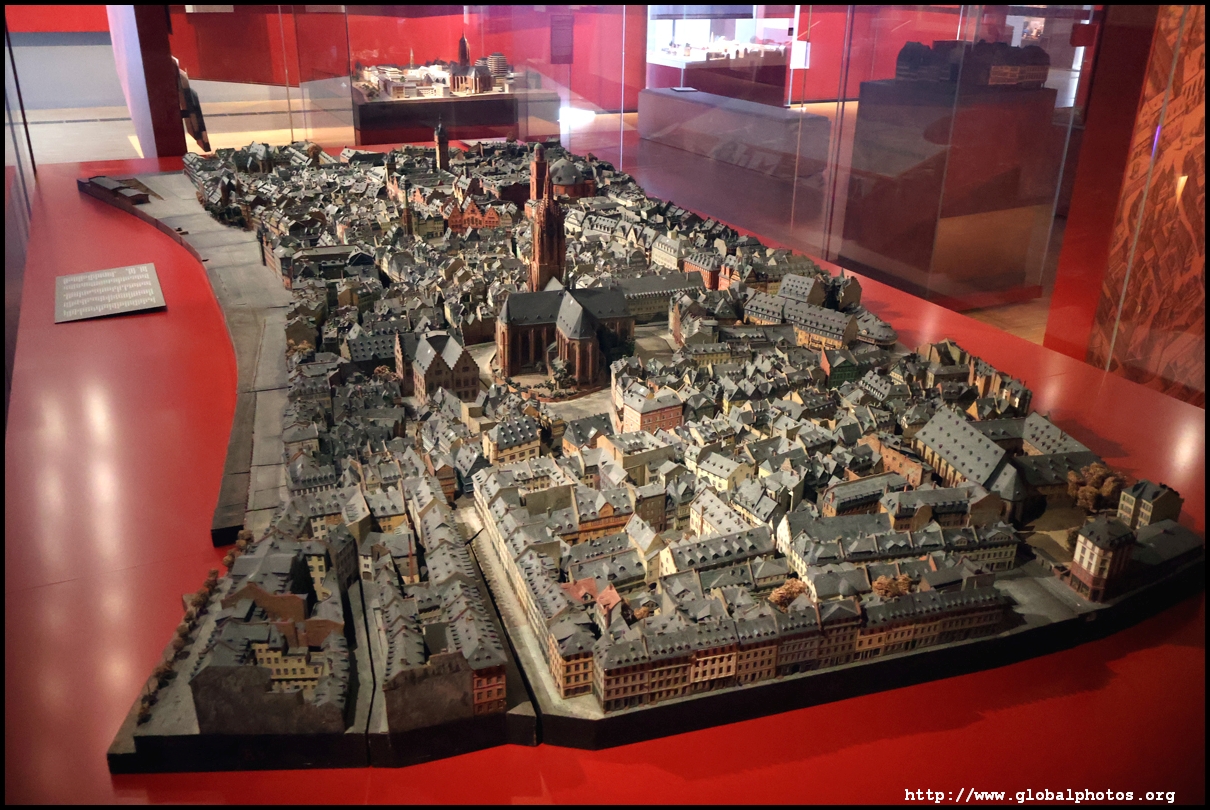
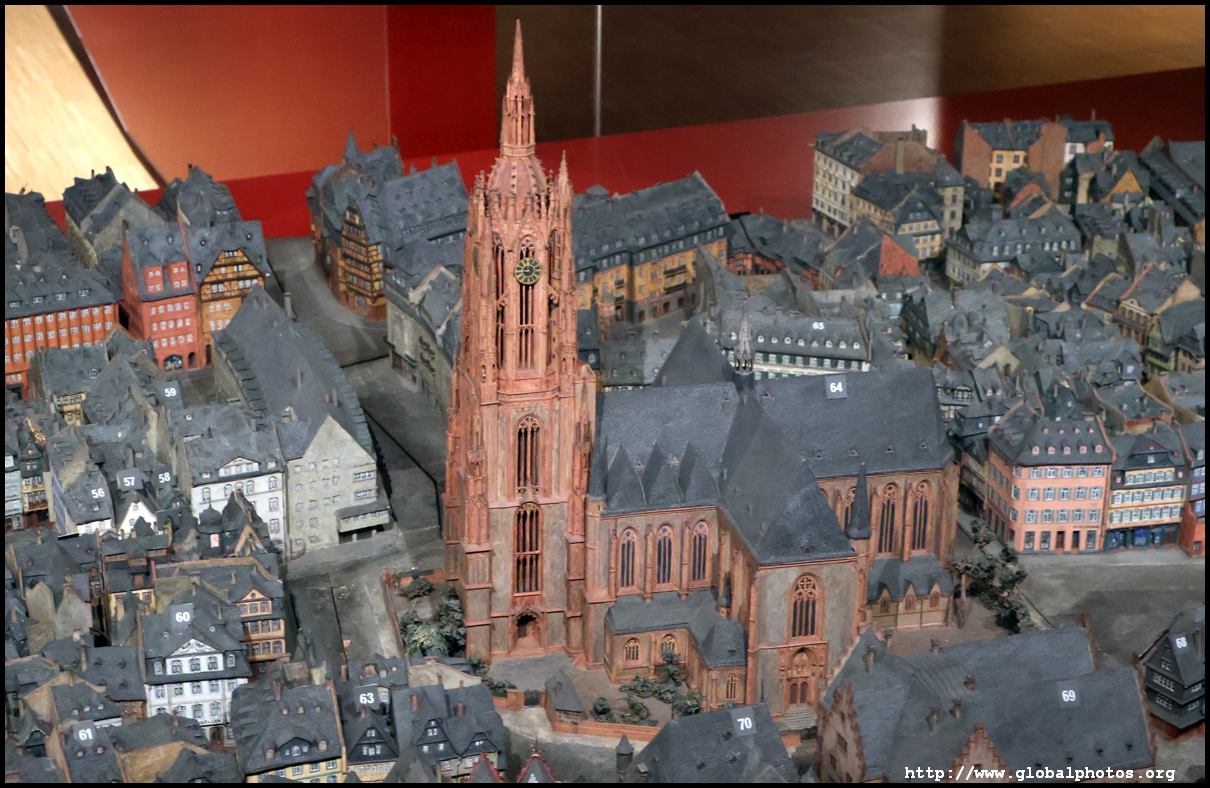
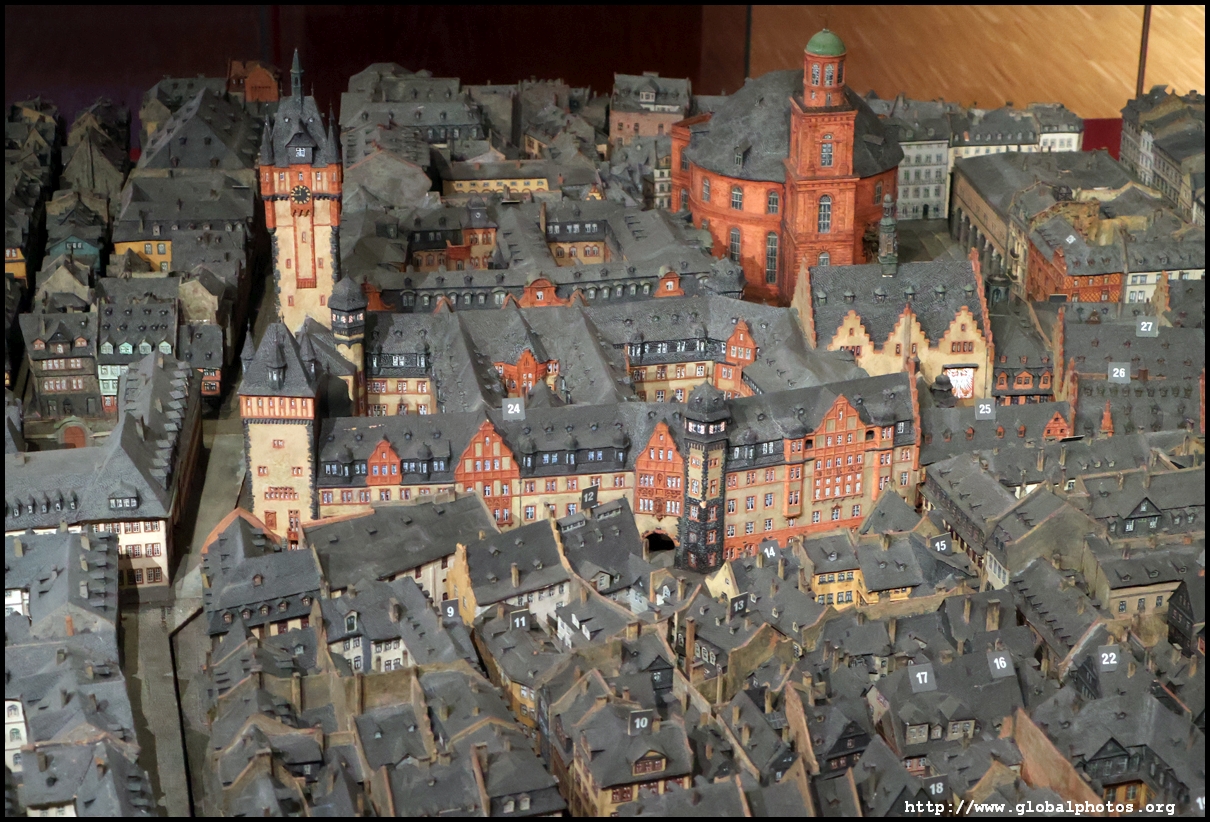
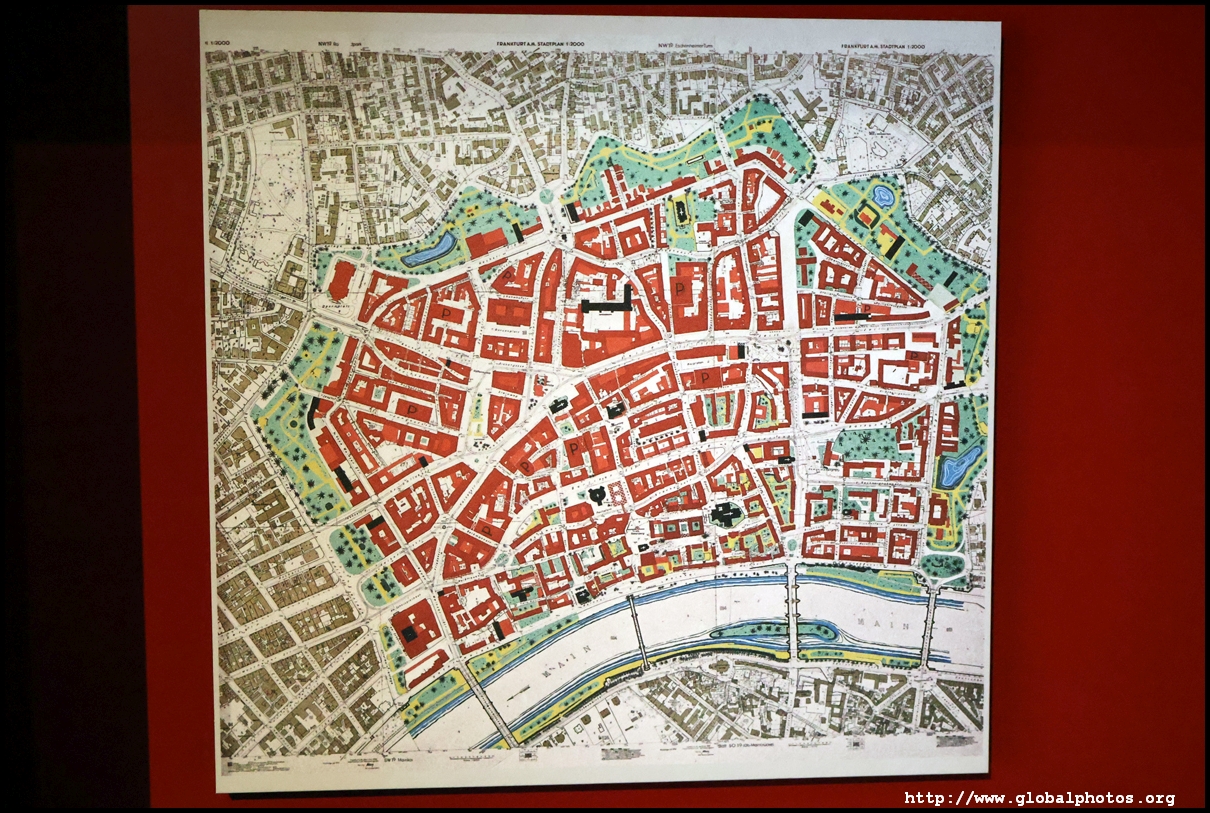
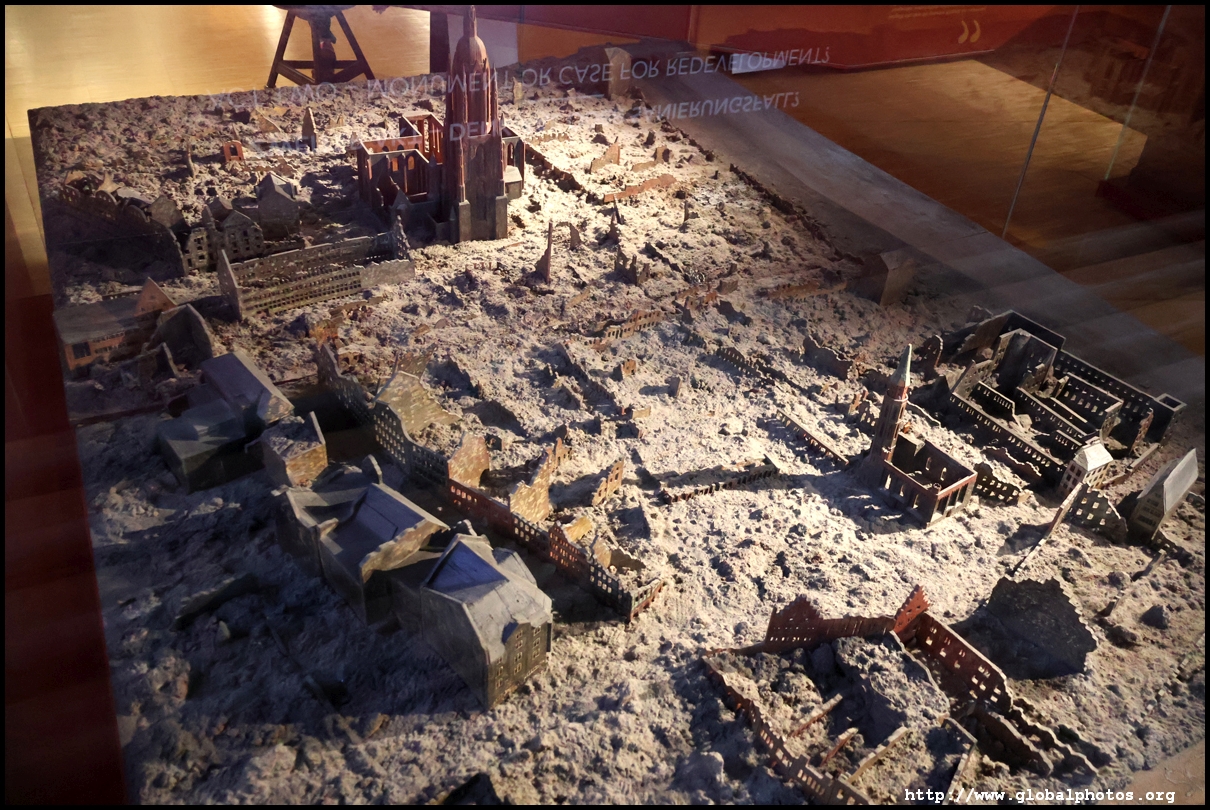
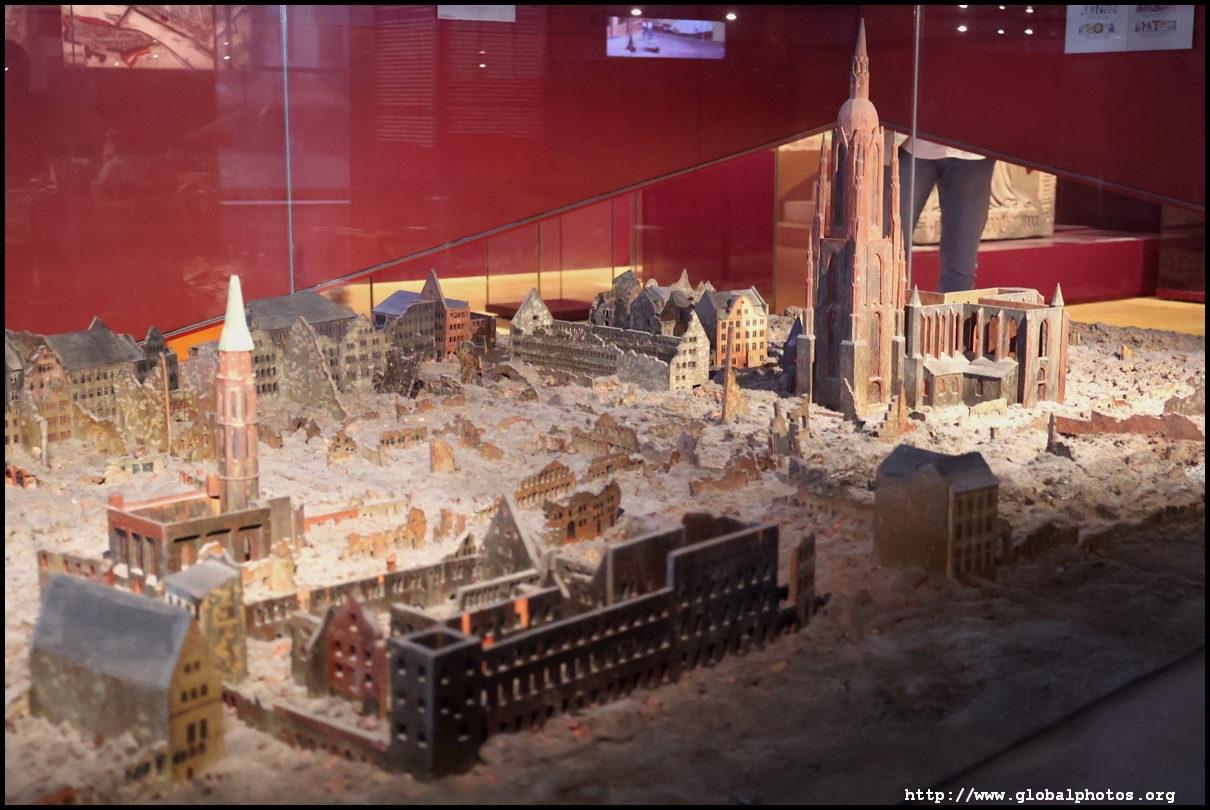
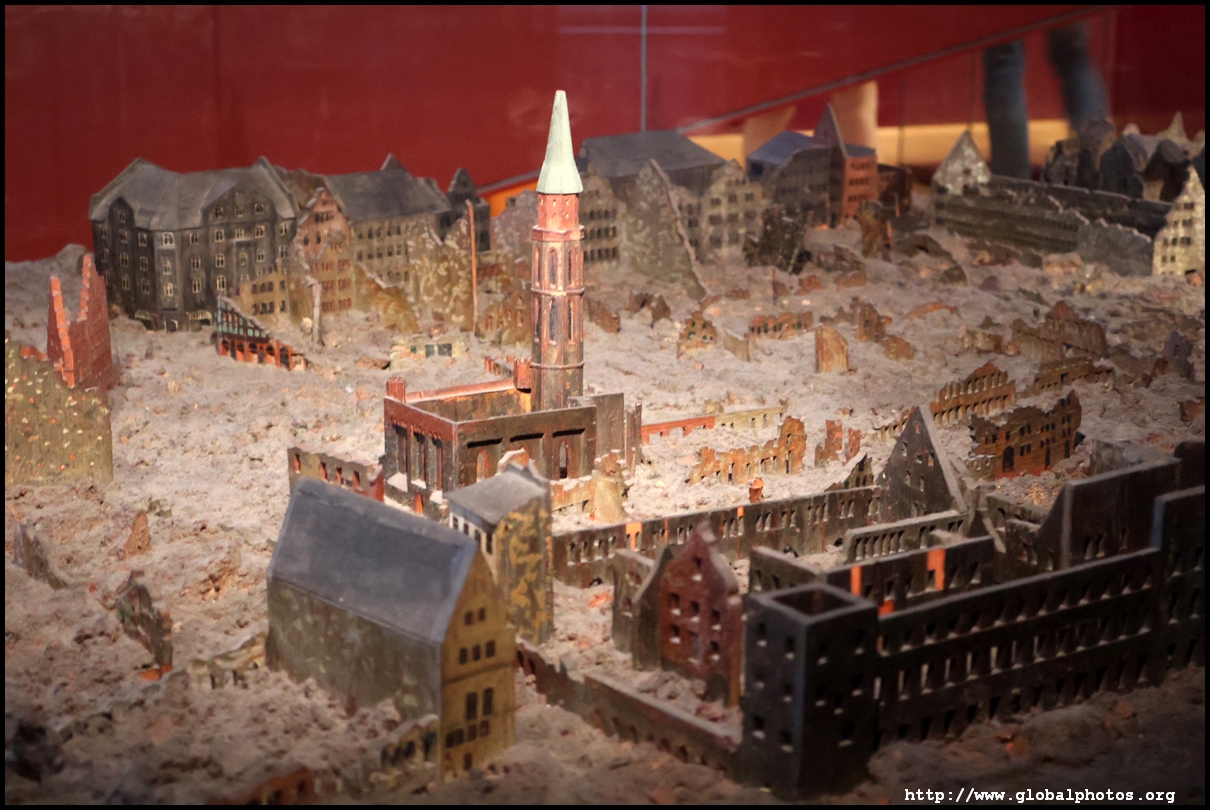
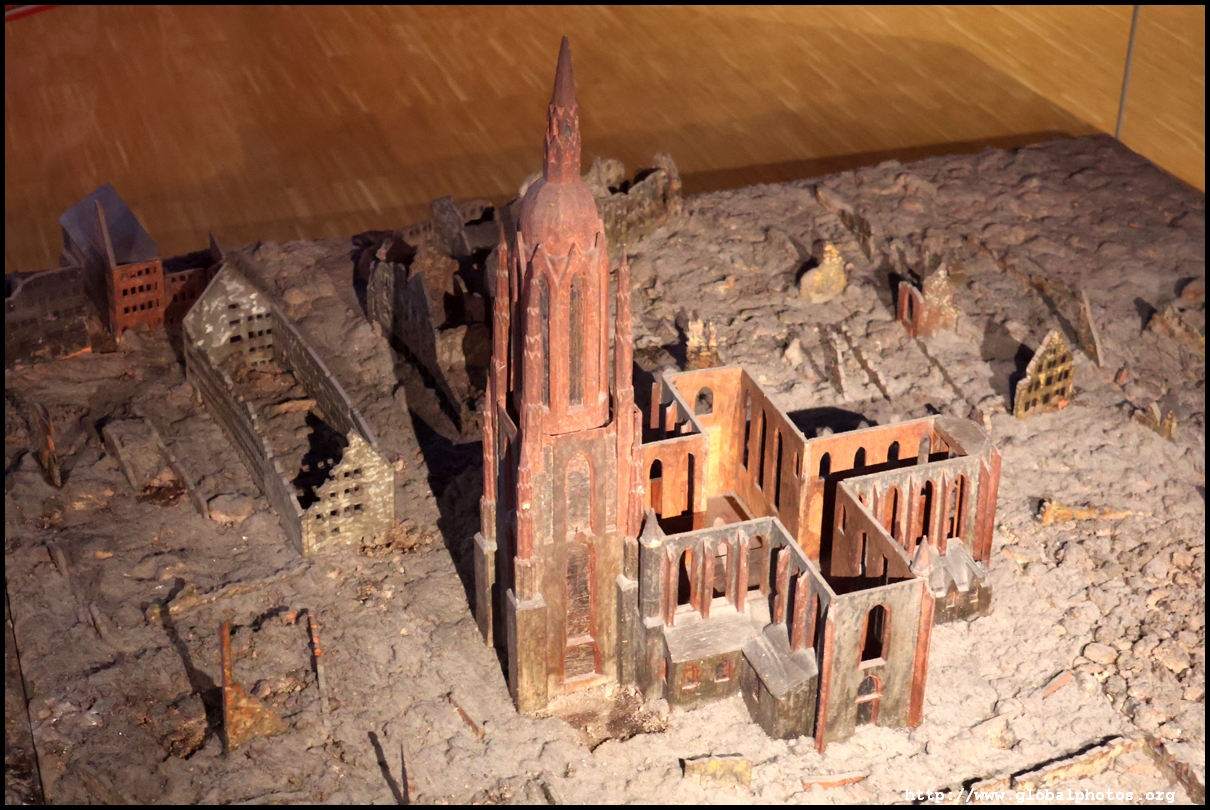
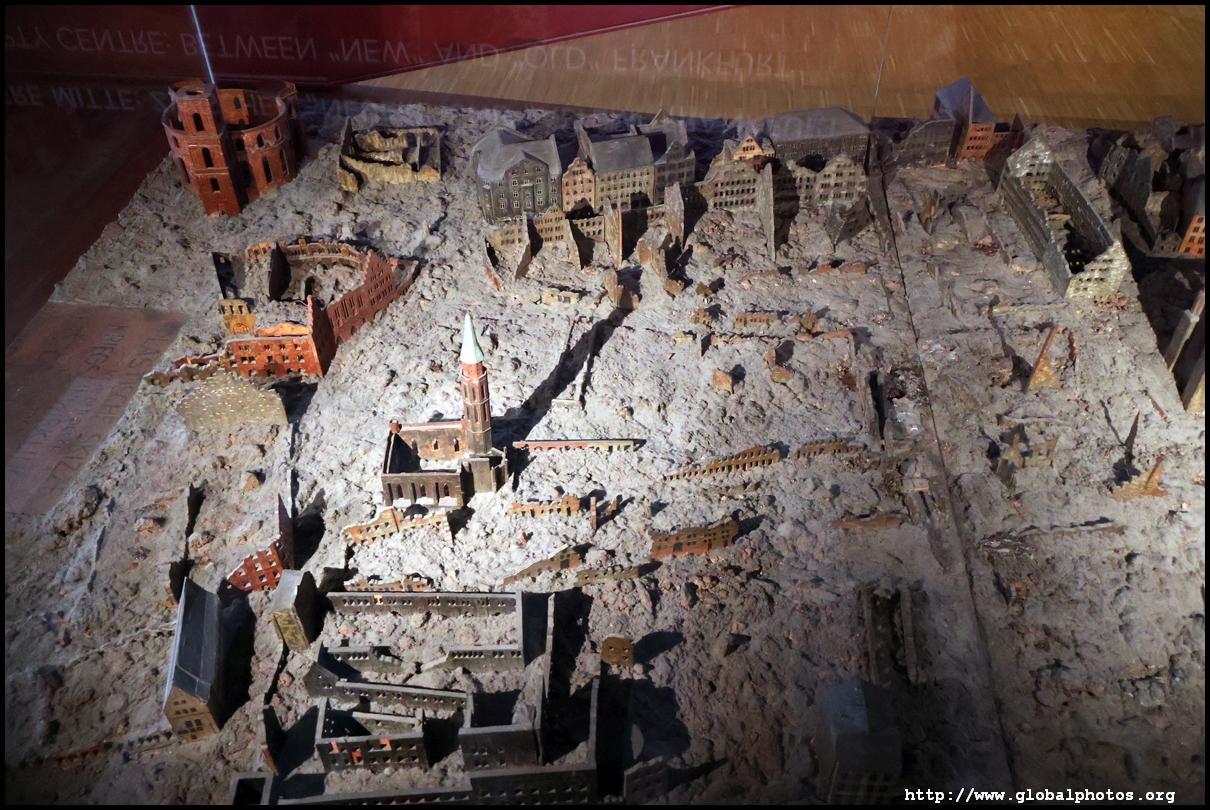
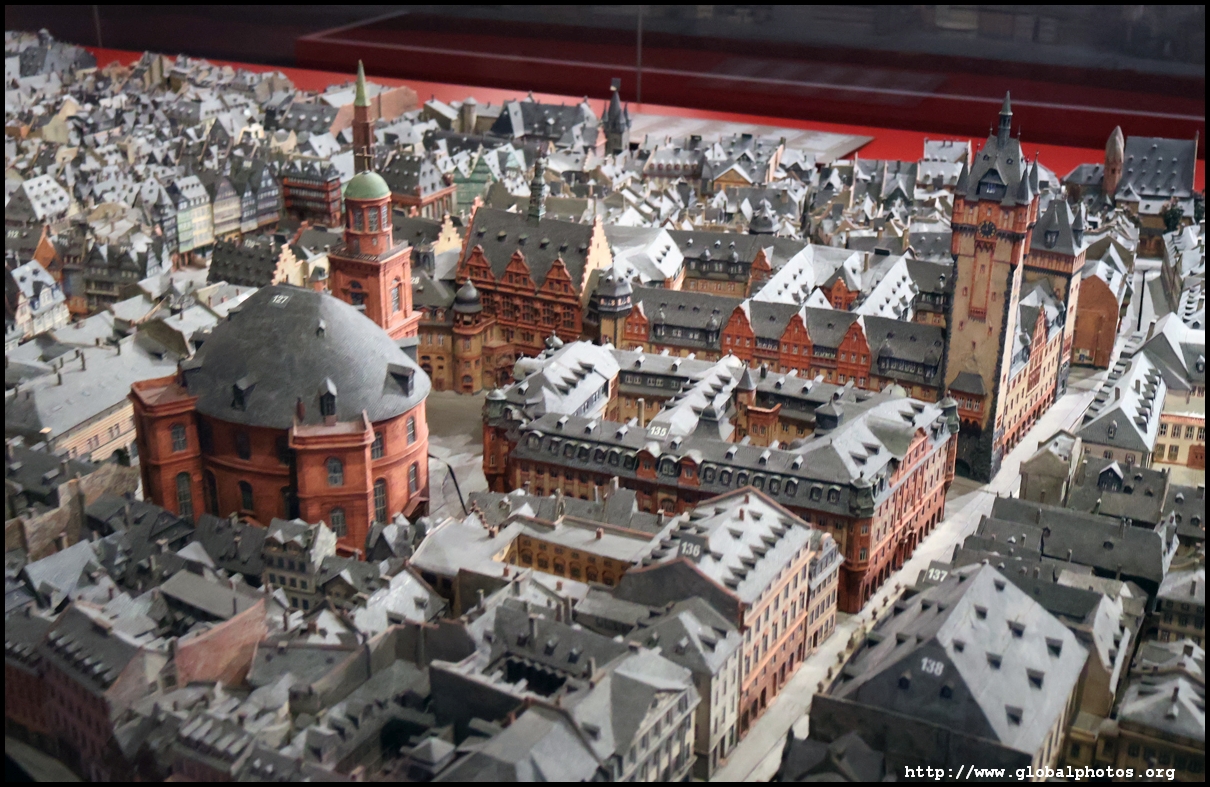
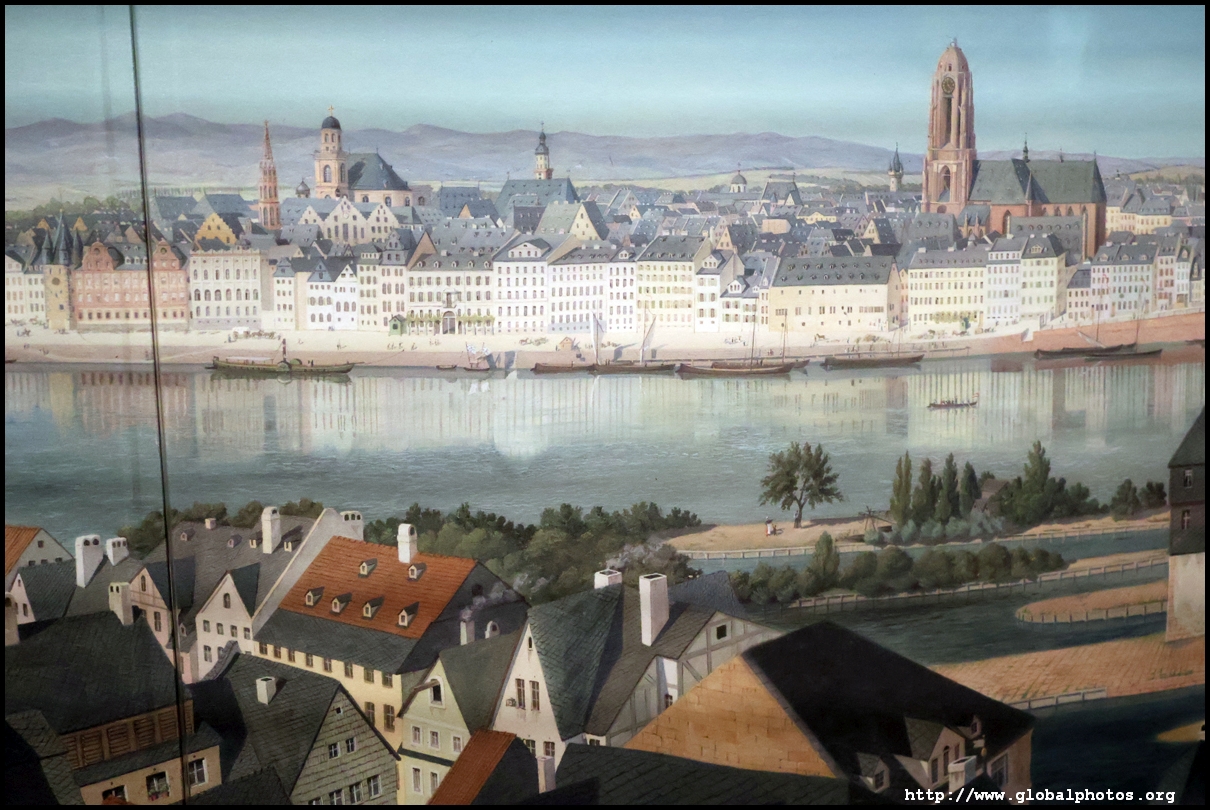
In the heart of the revitalized Old Town, the Historisches Museum is worth a visit to explore the city's history.Let's start with the Treuner brothers' Old Town model, which was built between 1925 and 1961 for the museum. It marks what the historic section looked like in 1927. After the war, this model was used in the debate of whether to rebuild or modernize the destroyed centre.
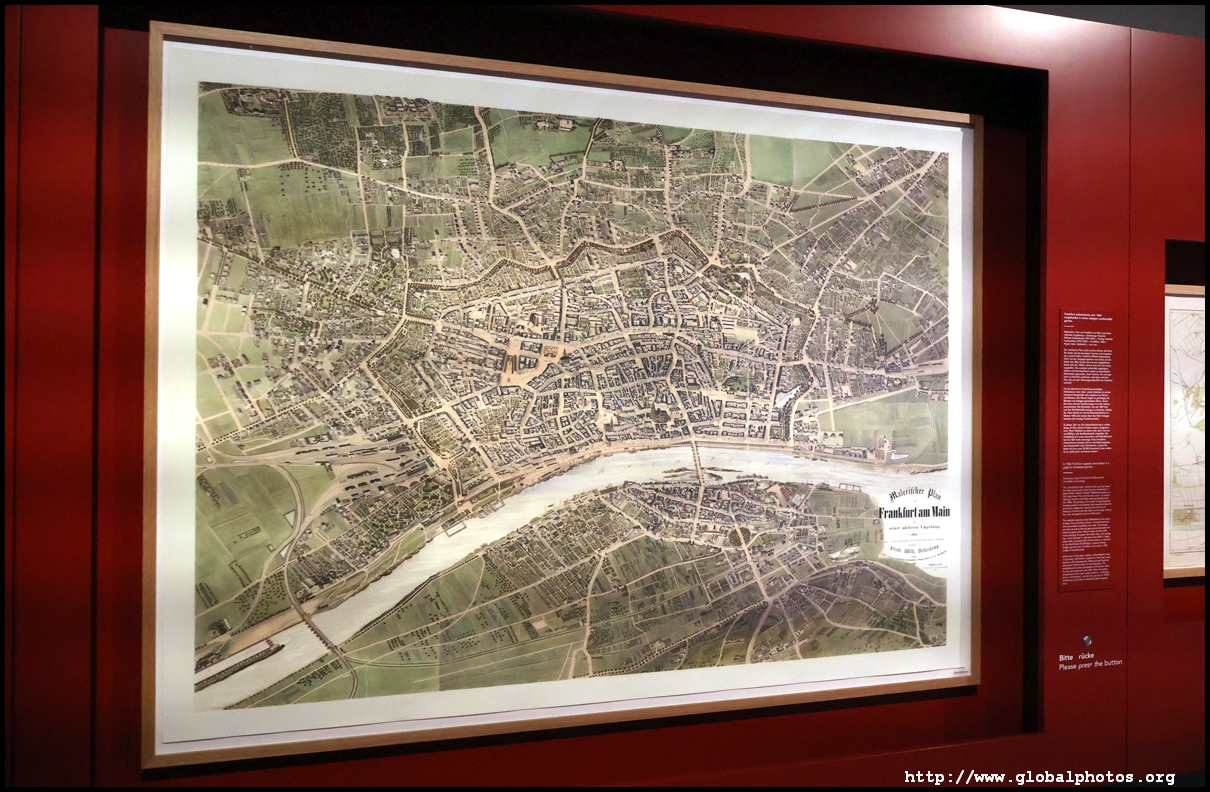
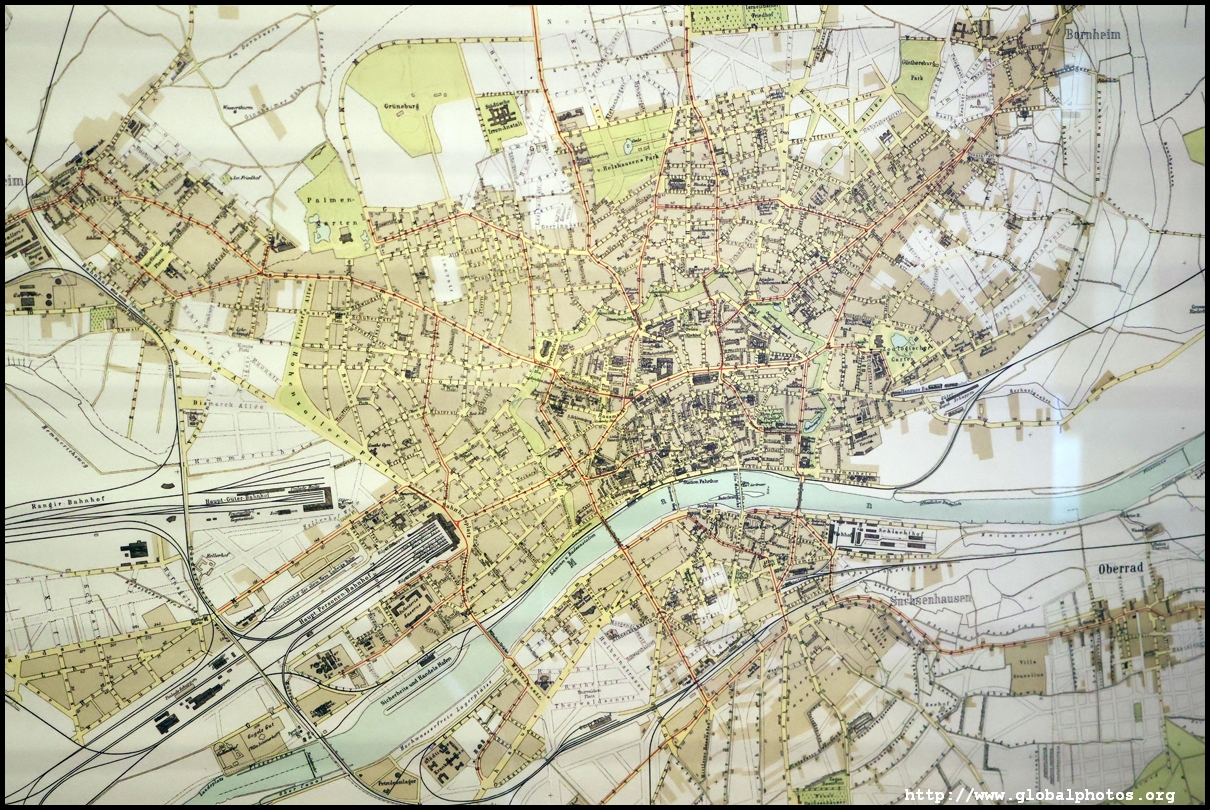
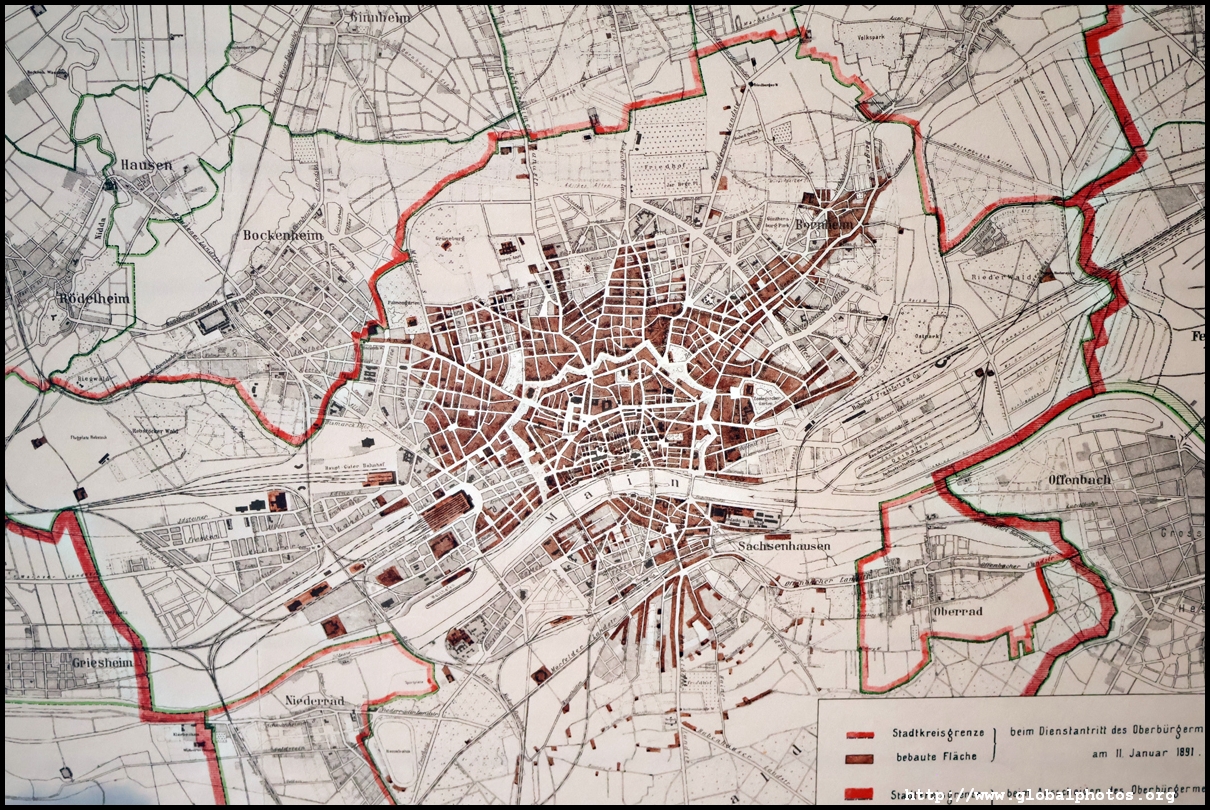
Behind it are maps of the city from various times - from 1864 to the 1950s. Factories were not allowed to be established within the town until 1864, keeping the appearance fairly green. The central railway station was built in 1888, and the town soon expanded into the periphery with a ring of avenues built and more residential districts to the north. Much of Frankfurt's centre was destroyed in World War II, and skyscrapers starting rising afterwards, although no building could be higher than the cathedral, or 95m.
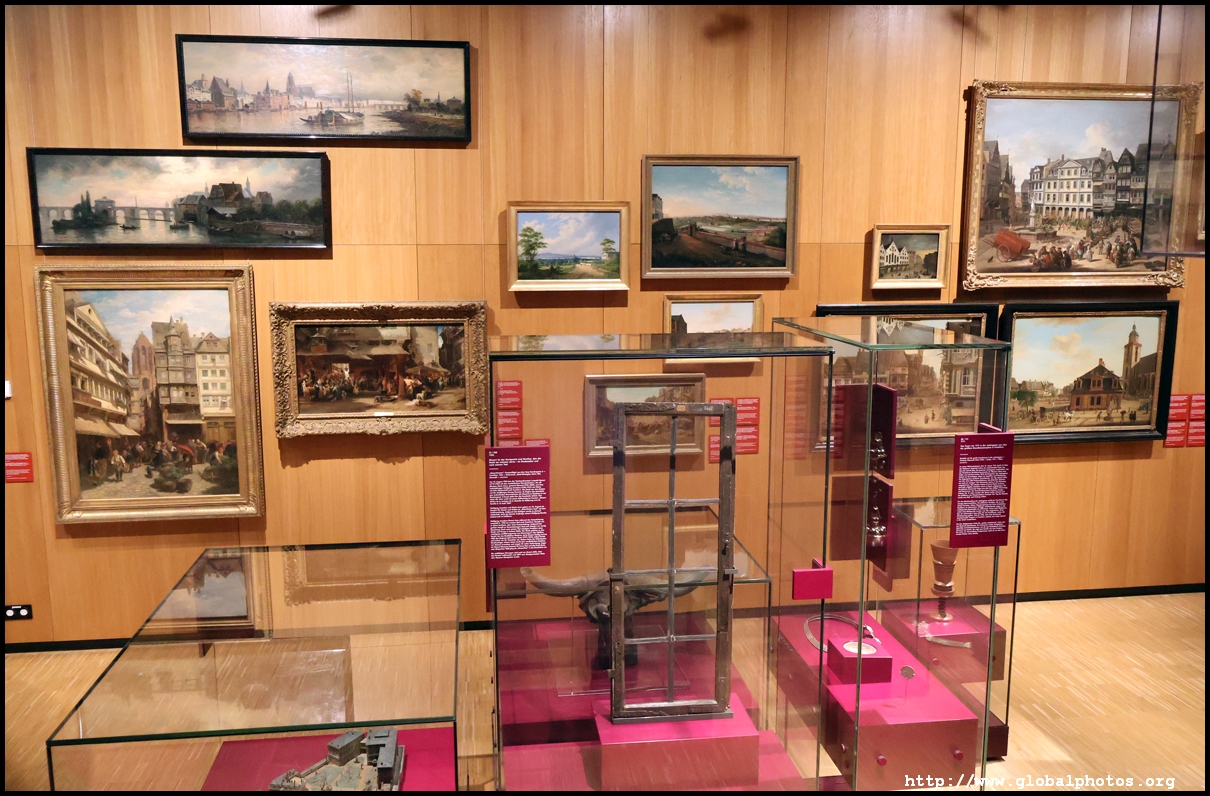
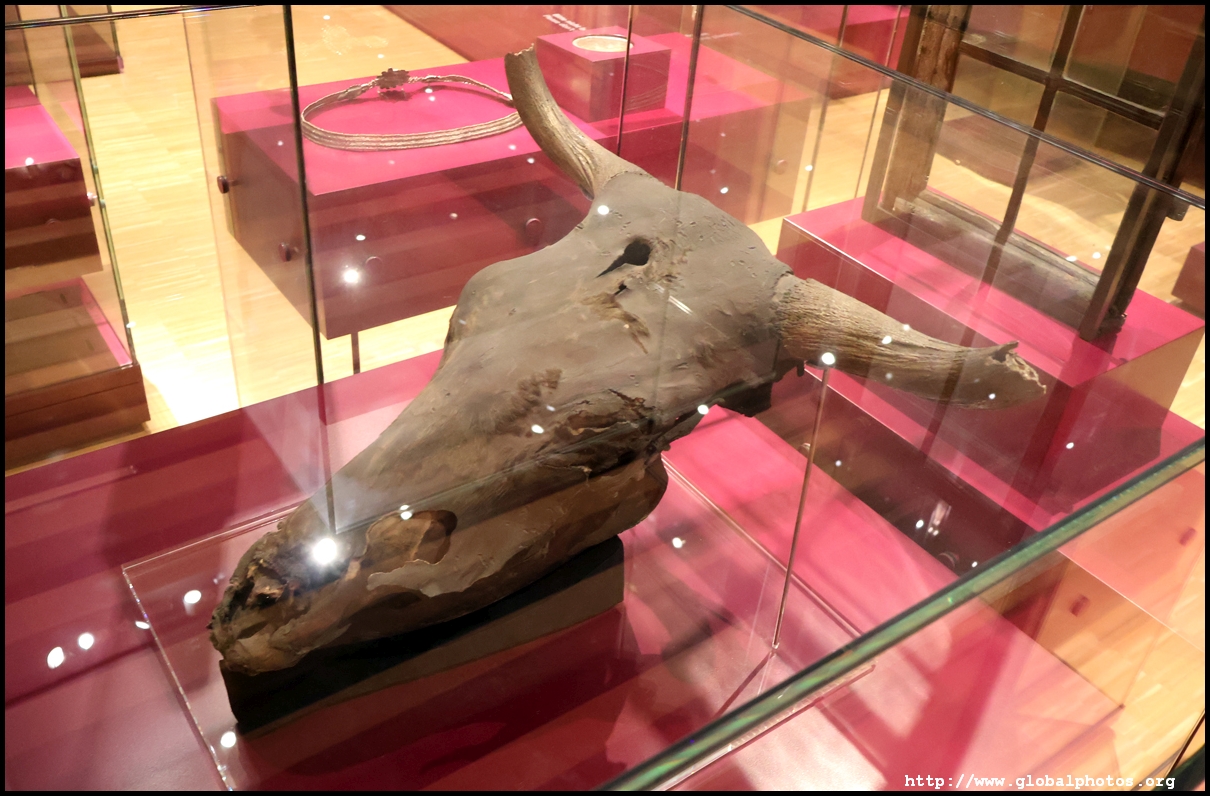
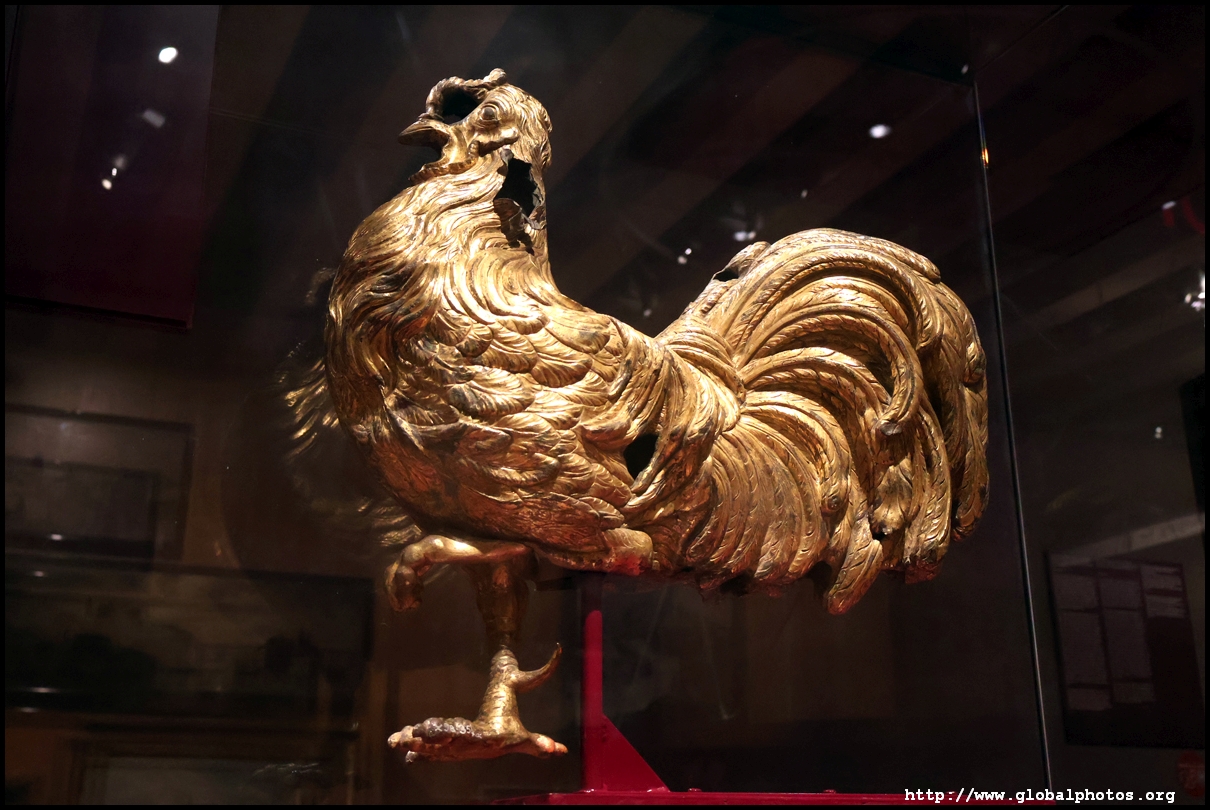
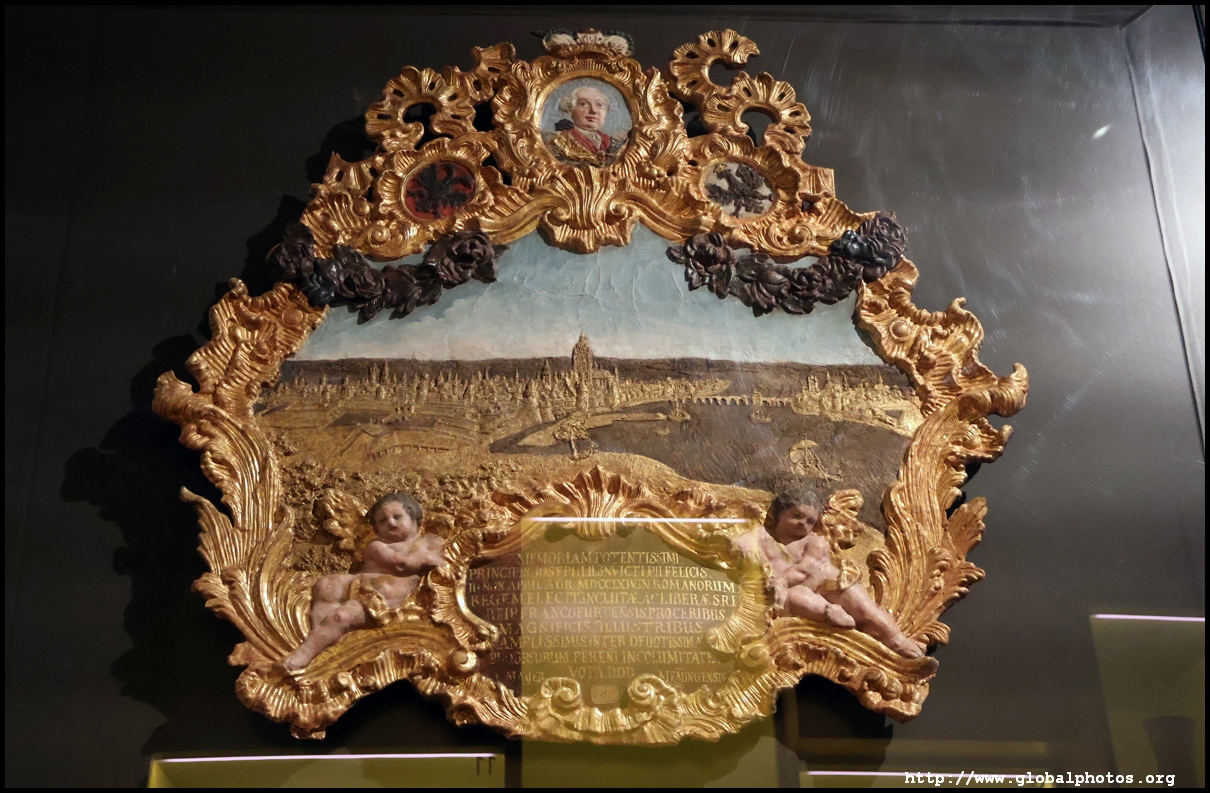
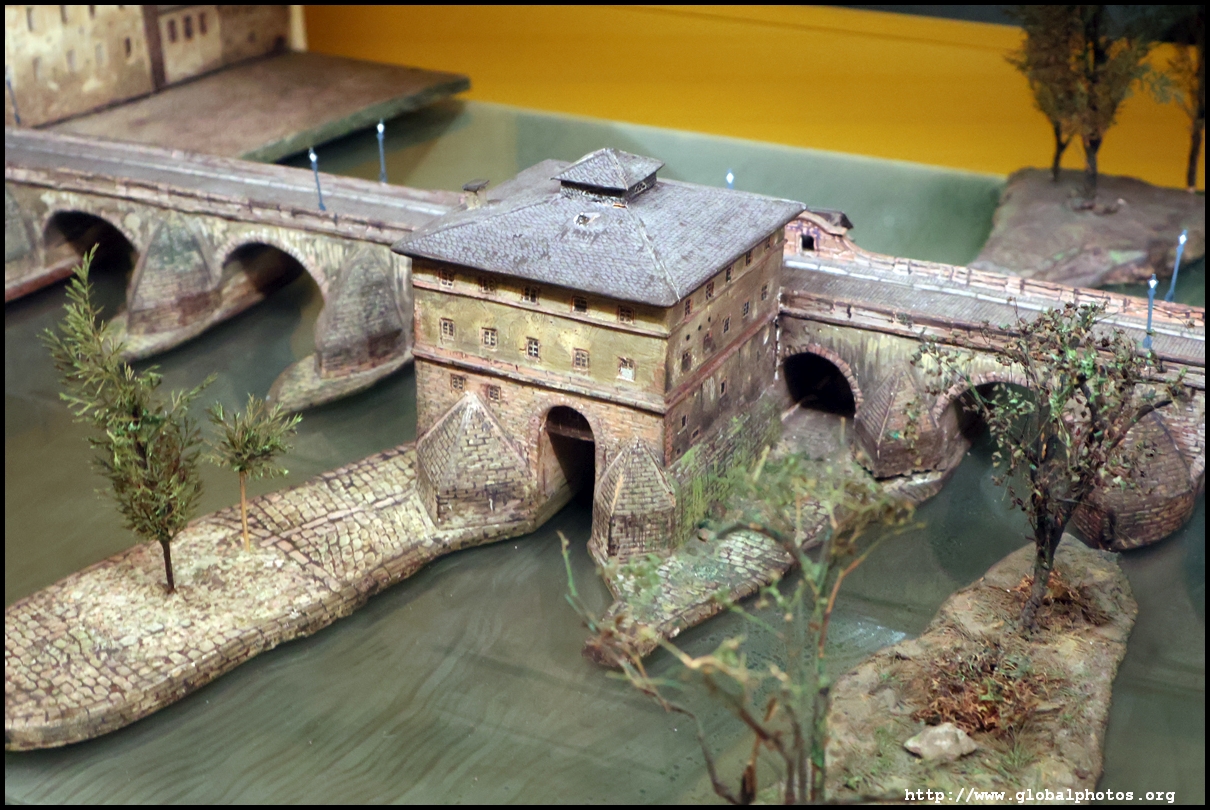
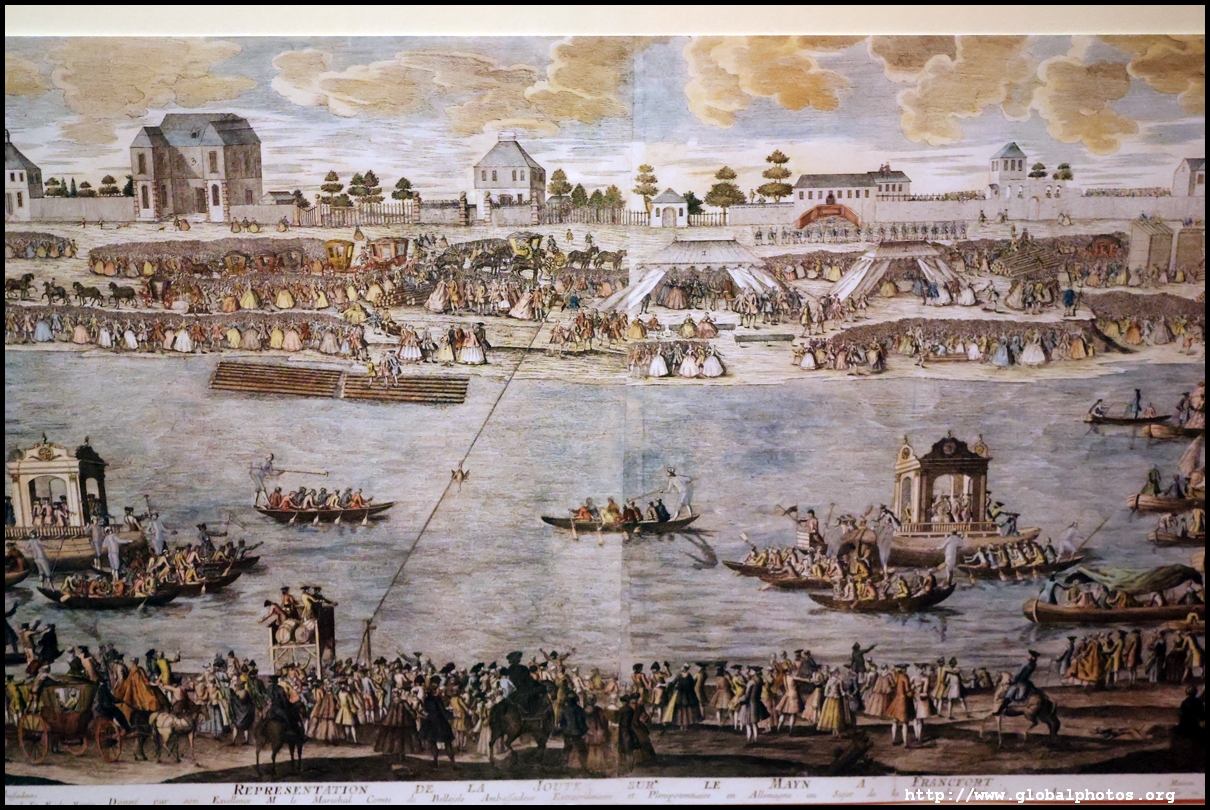
In the 1764 coronation of Joseph II, the ox was roasted for the festive banquet in the town hall. The emperor hosted a public celebration in the Romerberg with a ritual piece of the ox. On the left is the ox head that was won by the wine merchants and was donated to the museum in 1879. To the right is the bridge rooster from the Alte Brucke that dates from repairs in the 18th century, although the first written account of this rooster goes further back to 1401, marking the deepest point in the river and the spot to hold executions by drowning.
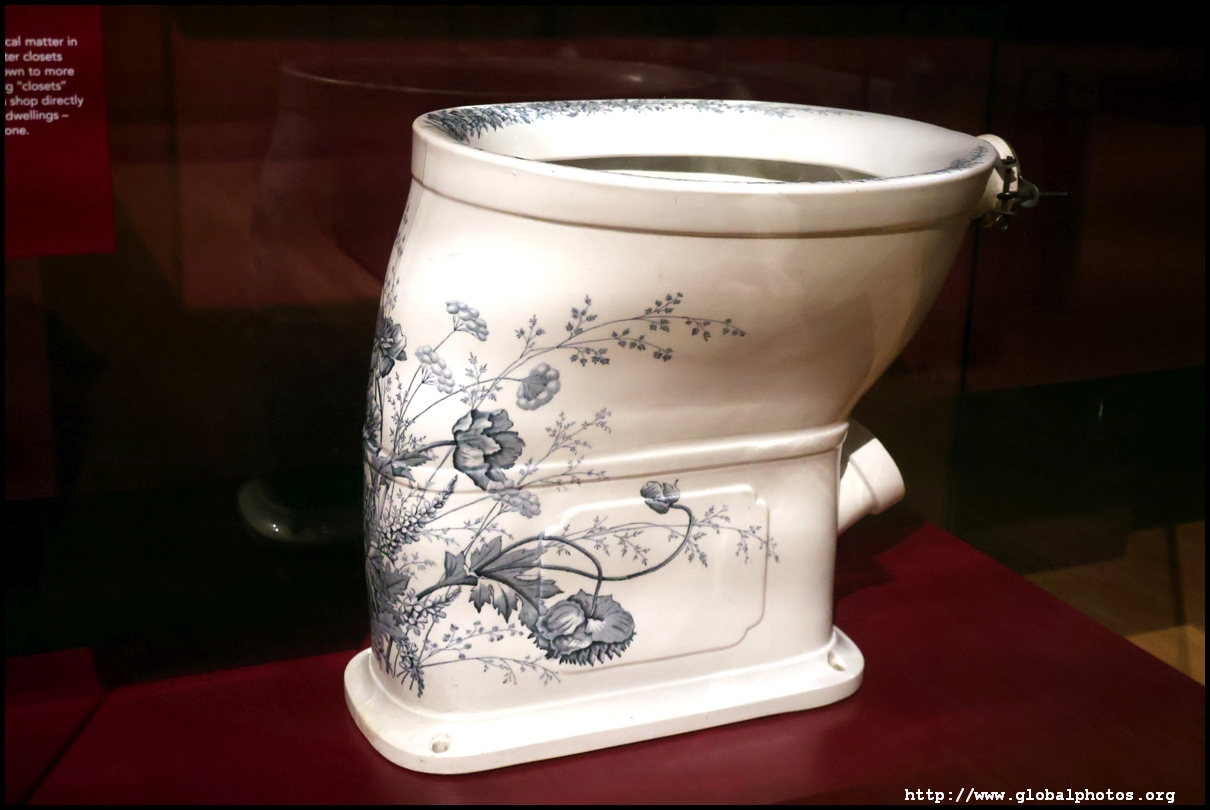
The English first connected cholera and contaminated water and developed sewage systems to prevent epidemics. In 1864, Frankfurt decided to build a gravity-based system of sewers, with the waste water being directed to a newly-built sewage plant. The first sewage treatment plant in Europe opened in Franfurt in 1887. This drove a boom in the toilet business, with the item on the right imported from England.
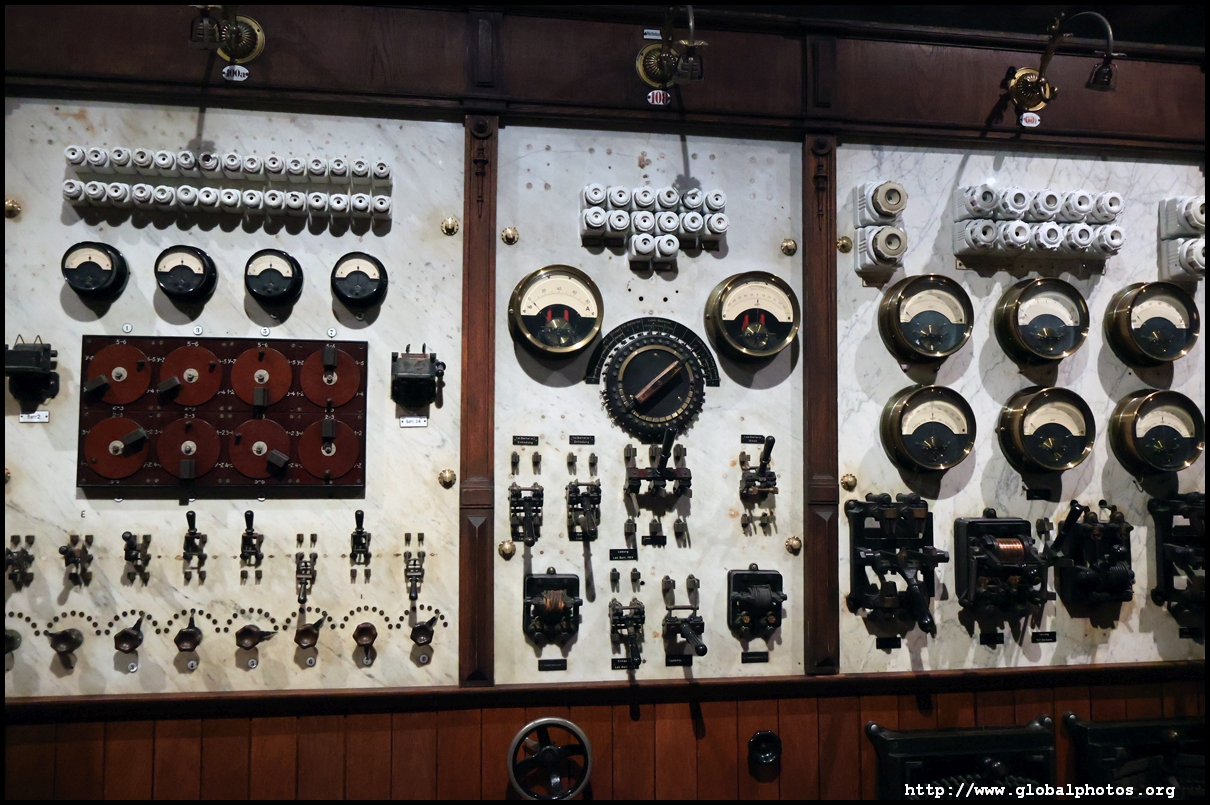
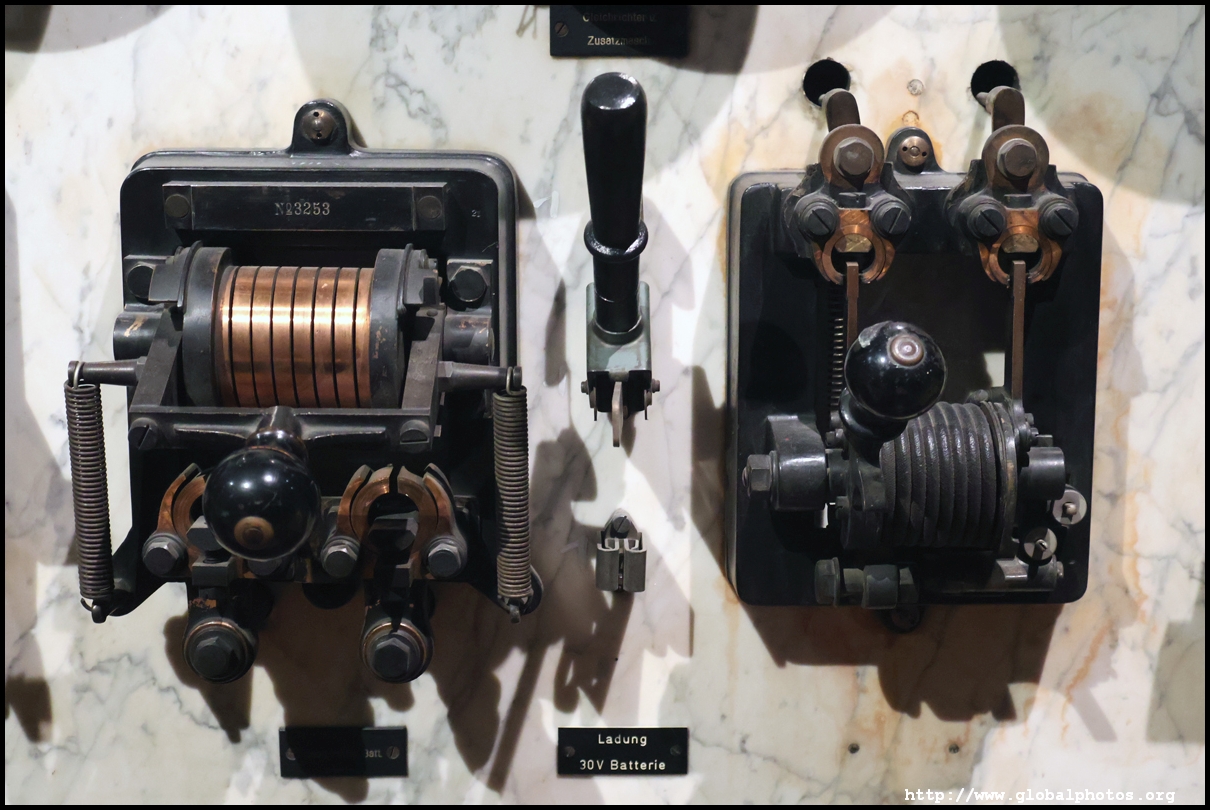
These panels were used from 1898 to 1927 at a factory to control the charge of the accumulator batteries.
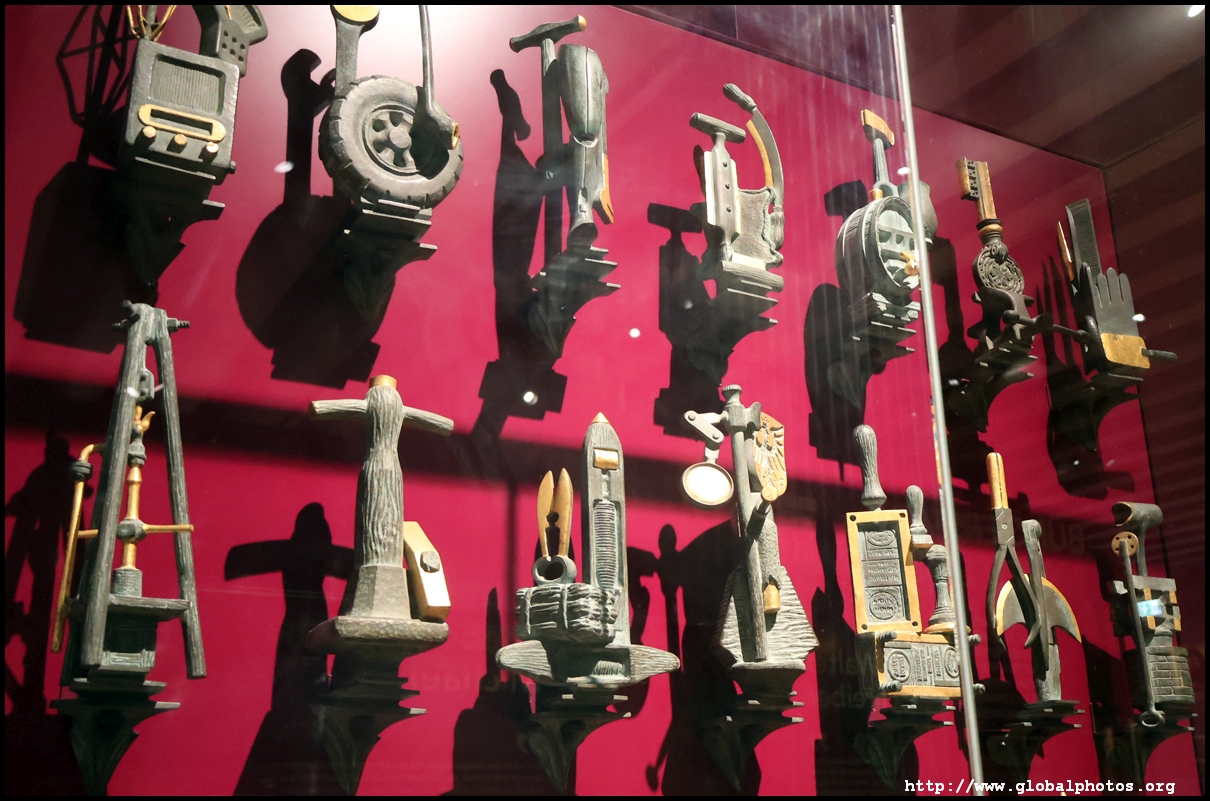
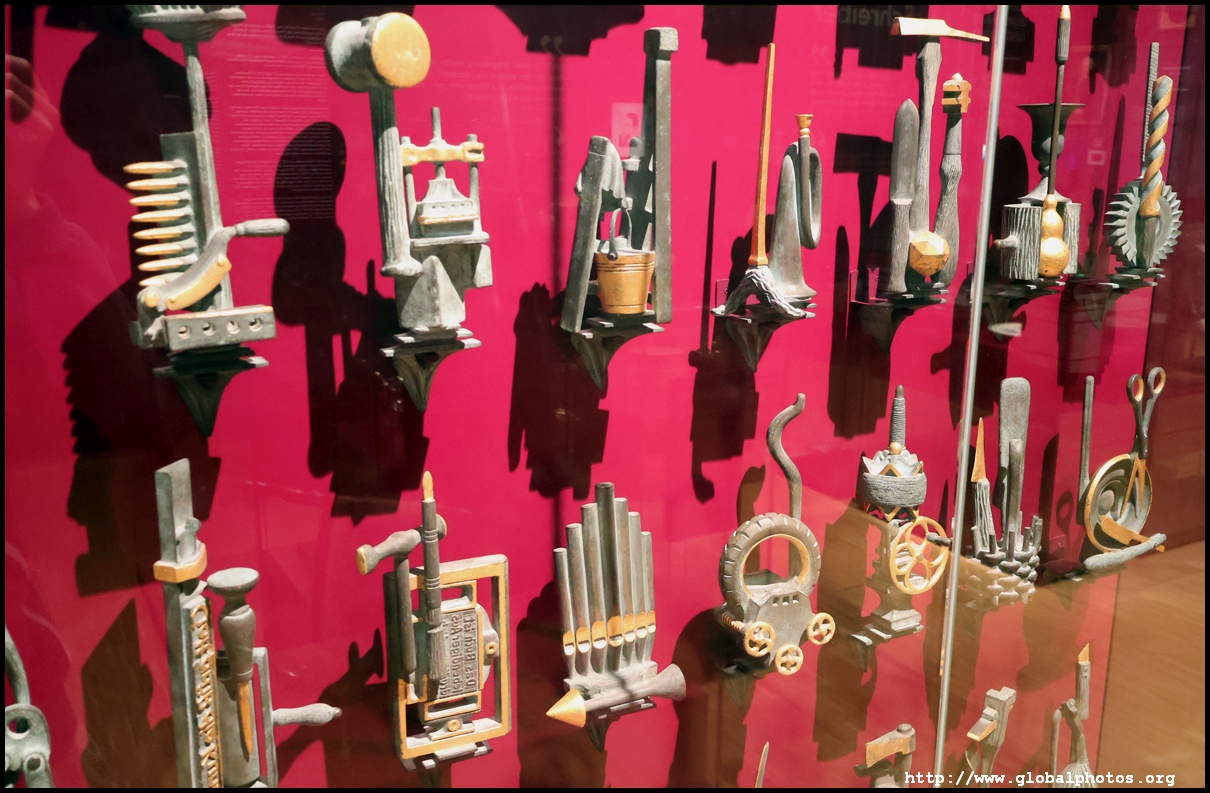
These are guild emblems for the "Fountain of German Crafts", which came about after Hitler awarded the city the title of "City of German Crafts" in 1935. This fountain was never fully realized due to World War II, and these pieces ended up here at the museum.
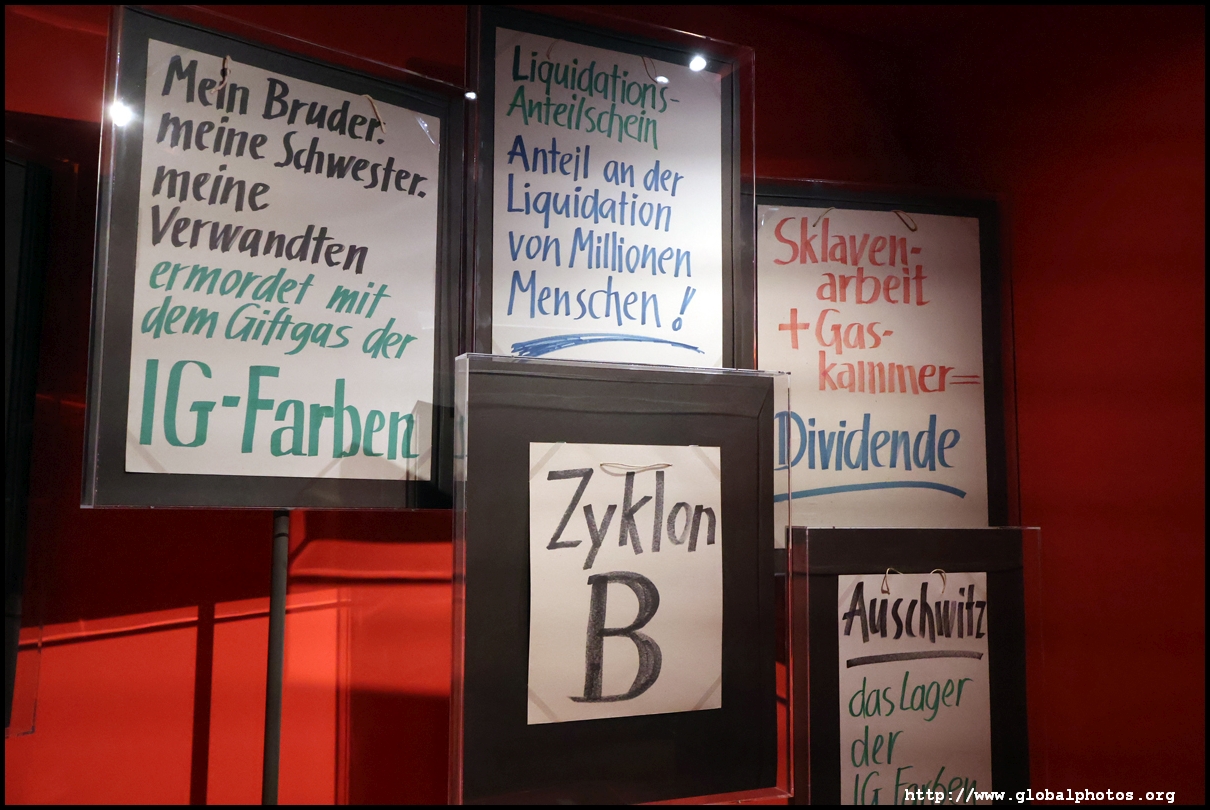
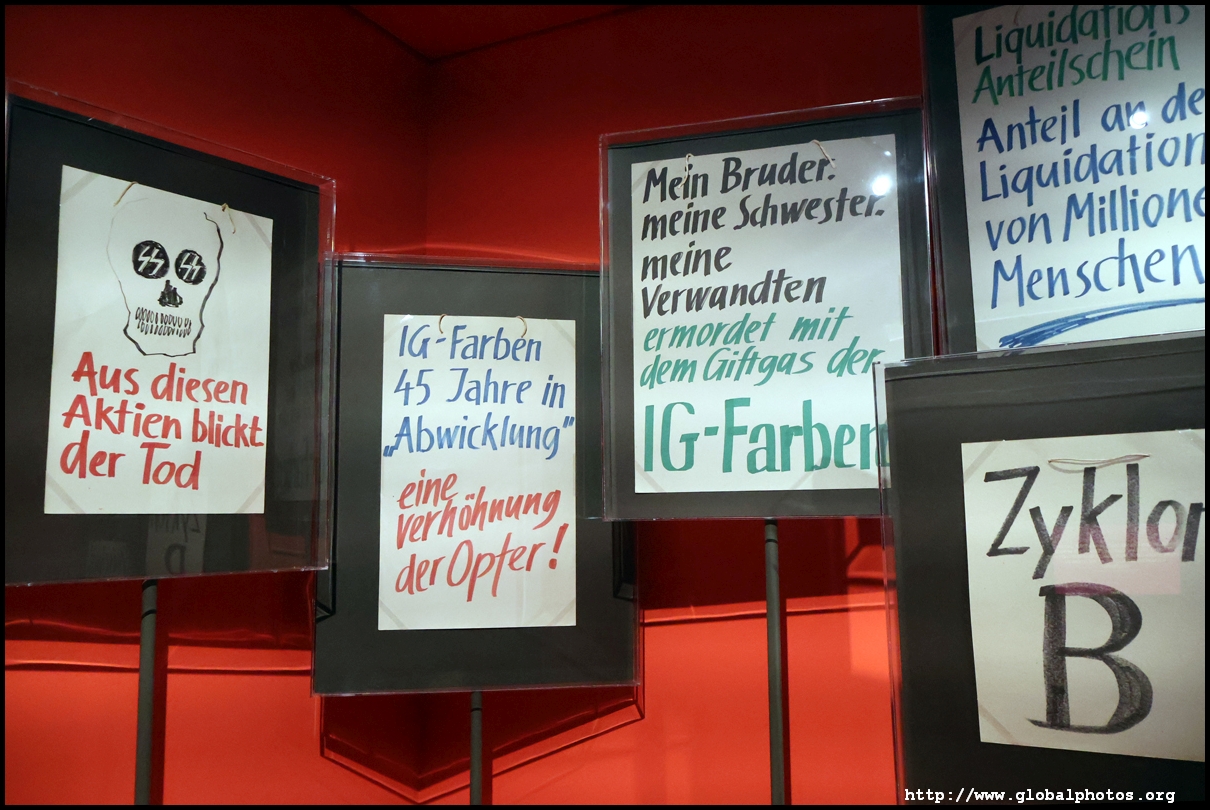
These protest placards ere aimed at IG Farben's annual meetings. Holocaust survivors, antifascist organizations, and the like campaigned for proper compensation and breaking up the company, which had used forced labour at concentraton camps and their products helped kill Jews in the gas chambers.
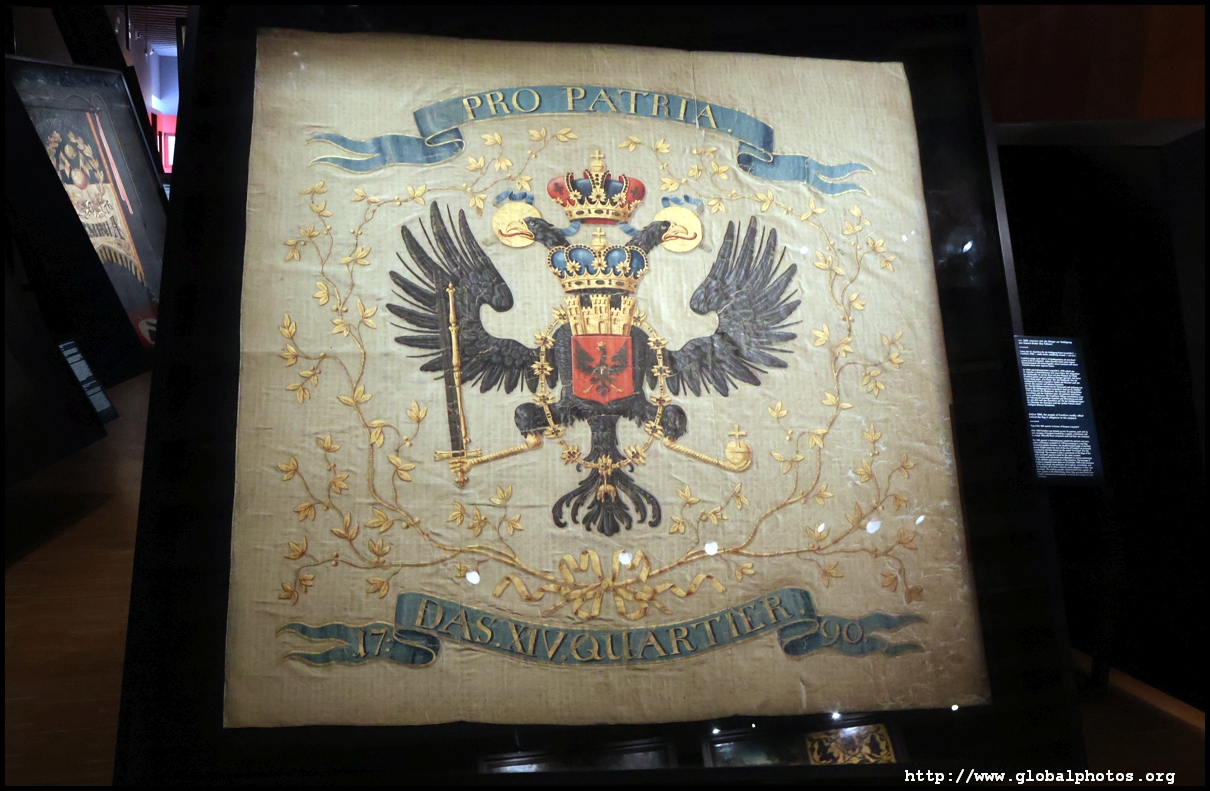
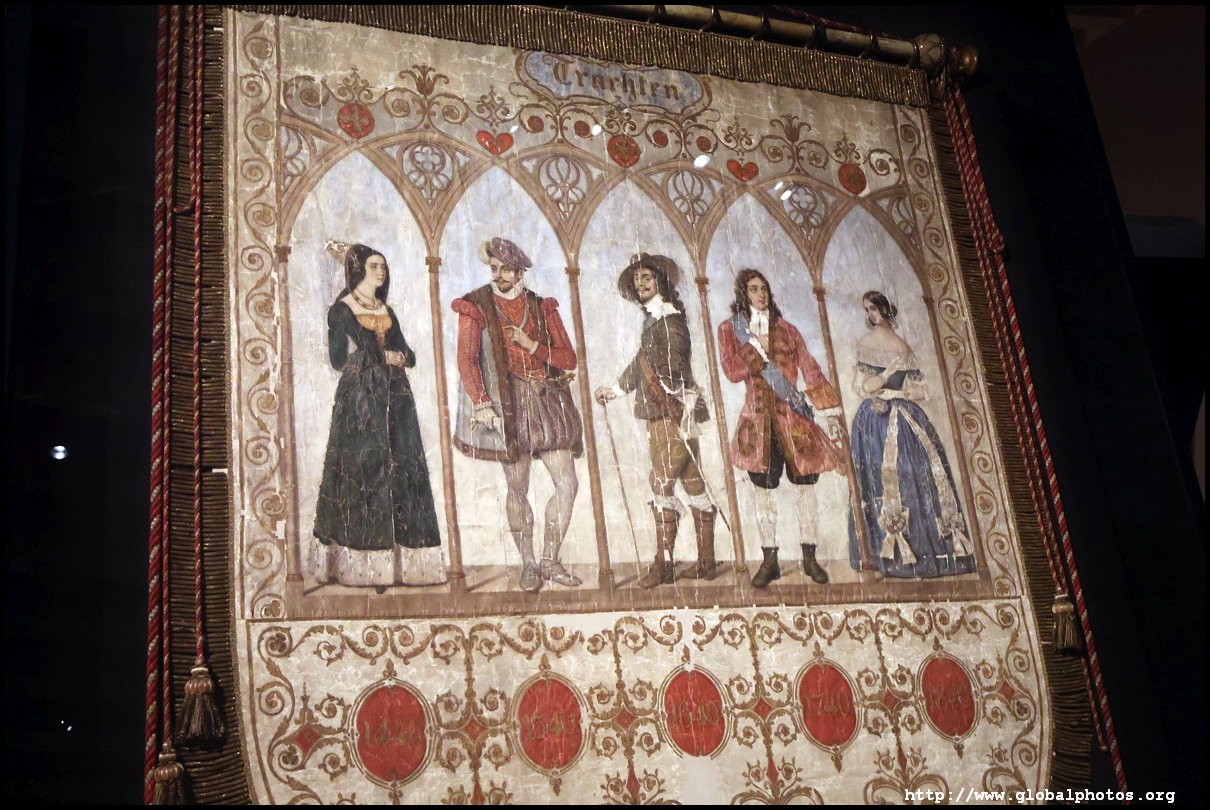
On the left is the flag of the 14th quarter. Frankfurt was divided into 14 quarters in 1614. A new flag was devised to celebrate Leopold II's coronation in 1790.
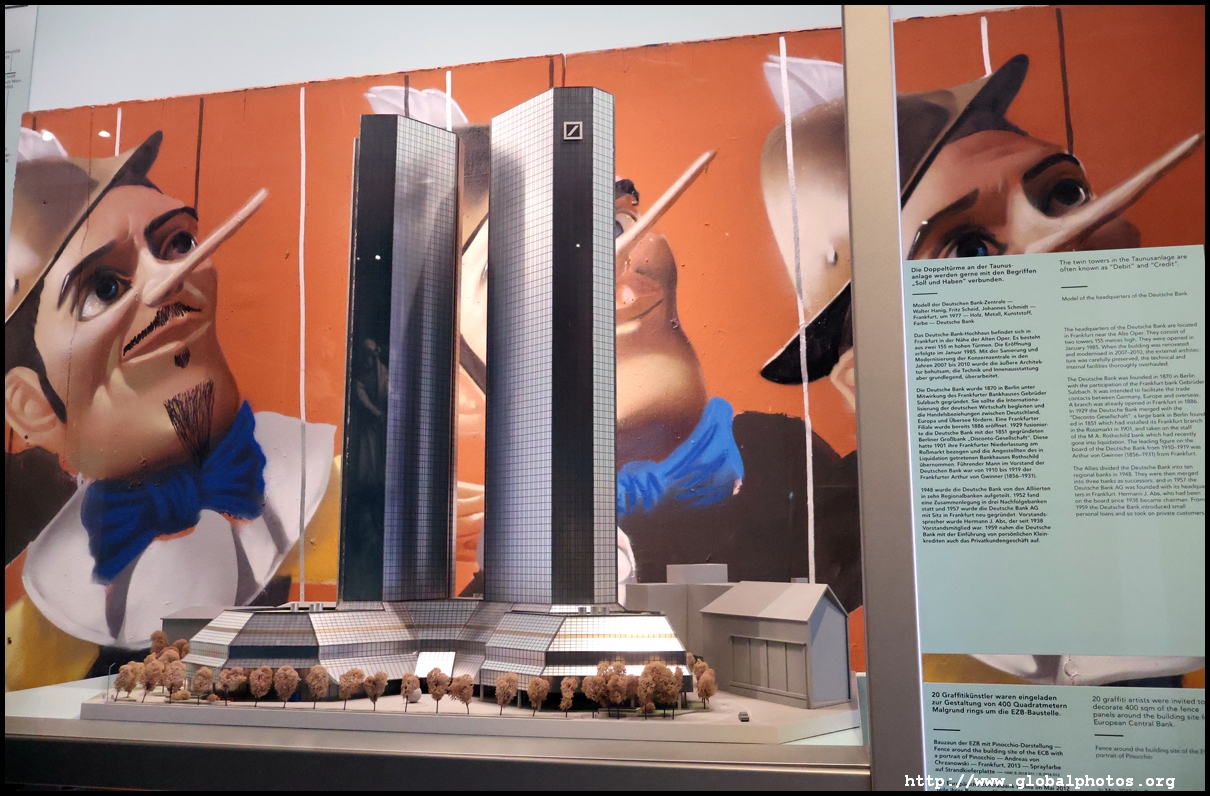
This is a model of Deutsche Bank's headquarters, which consist of 2 towers reaching 155m that opened in 1985. While the bank was originally founded in Berlin in 1870, it was divided into regional banks after World War II, with the final successor based in Frankfurt in 1957.
\
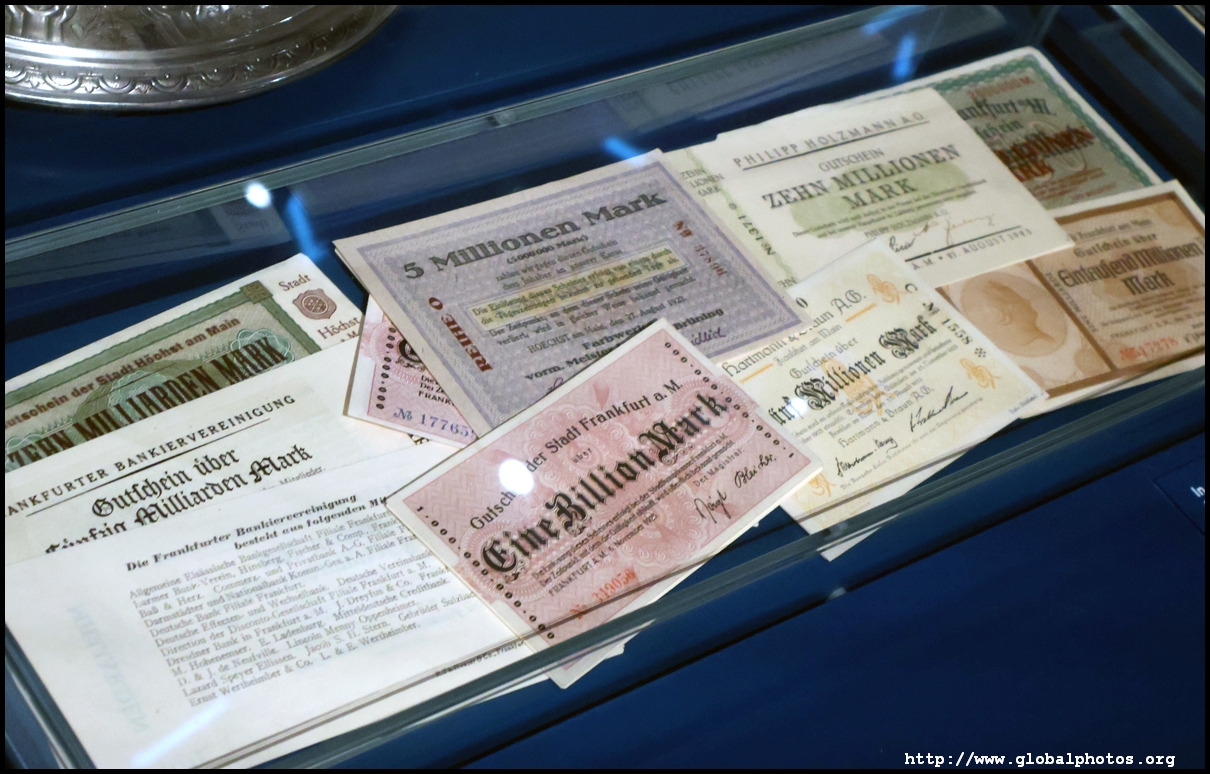
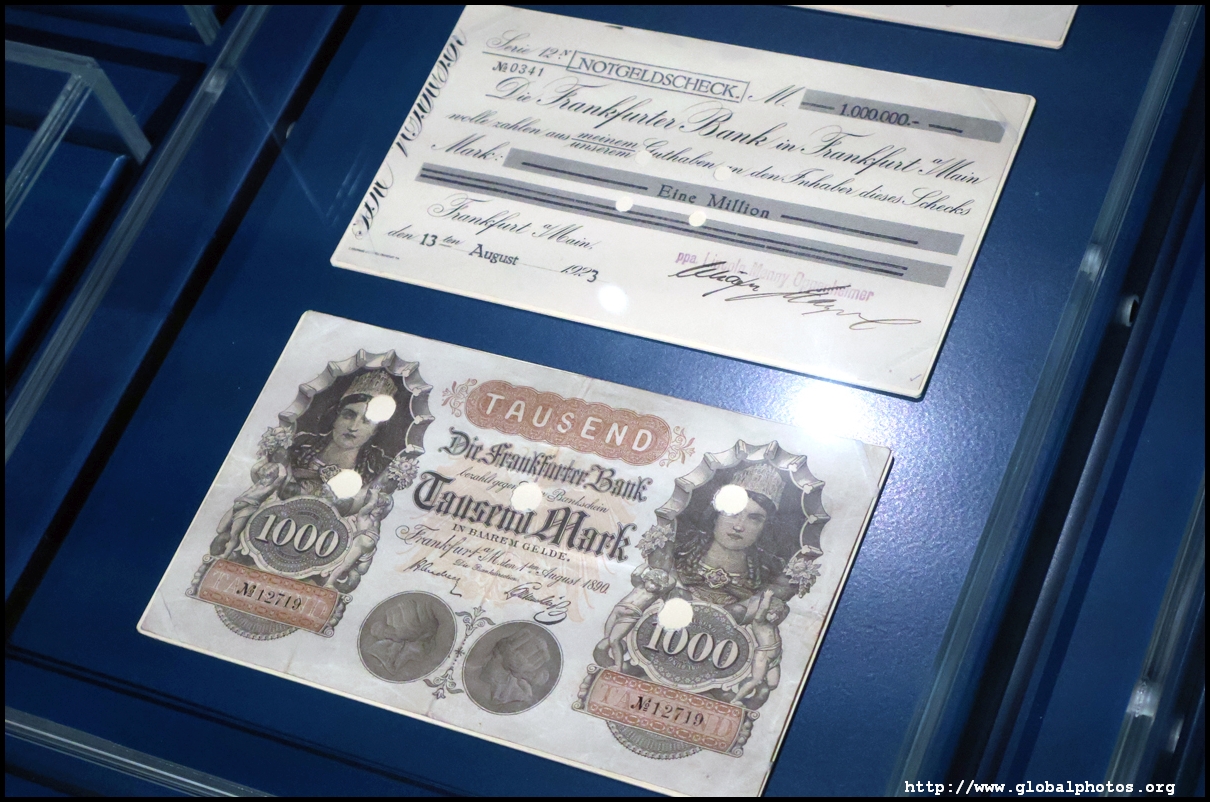
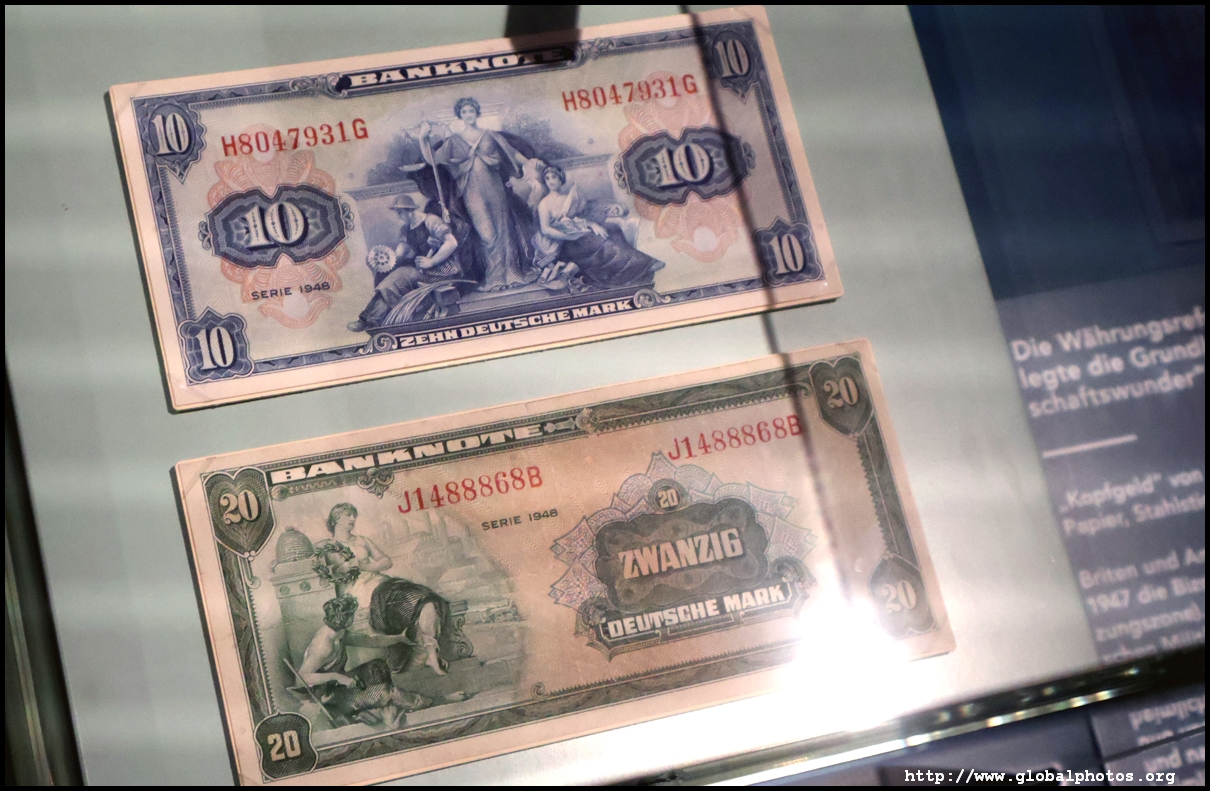
Hyperinflation in 1923 prompted cities and municipalities to print emergency money, which made things worse.
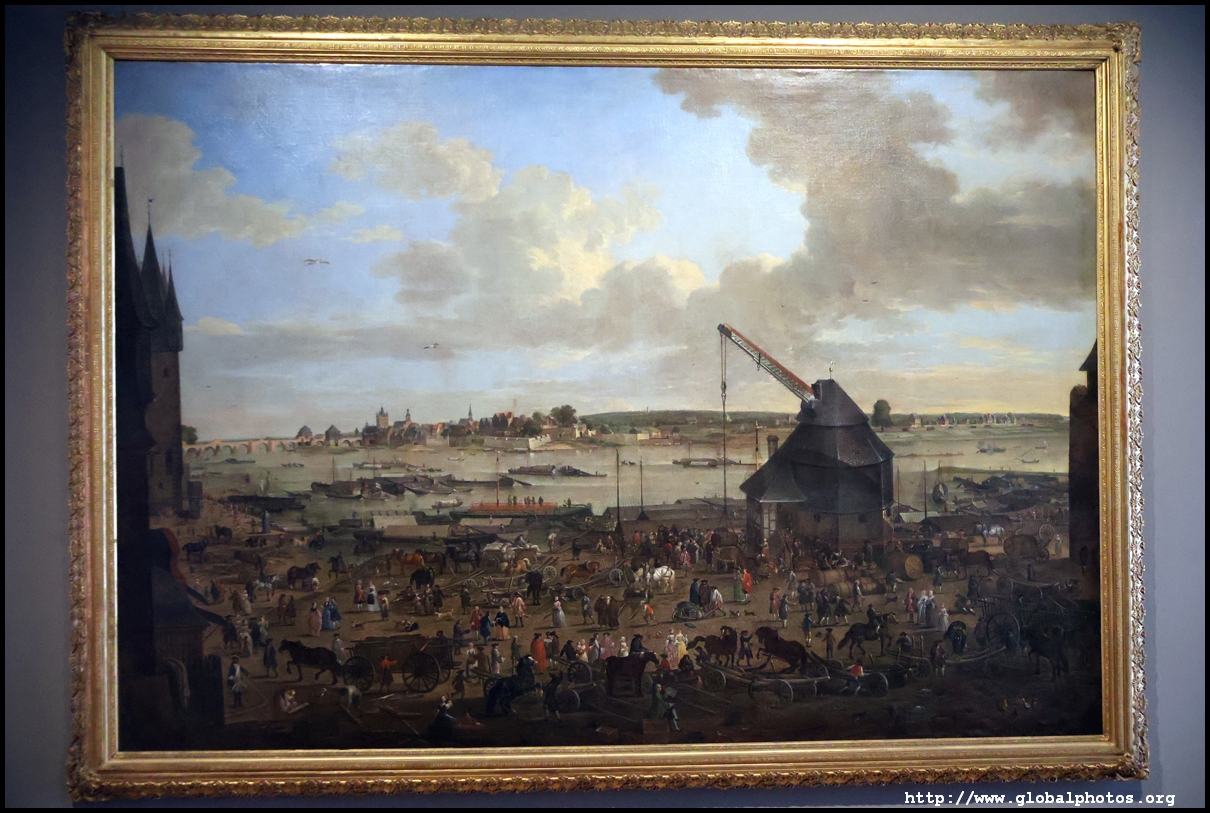
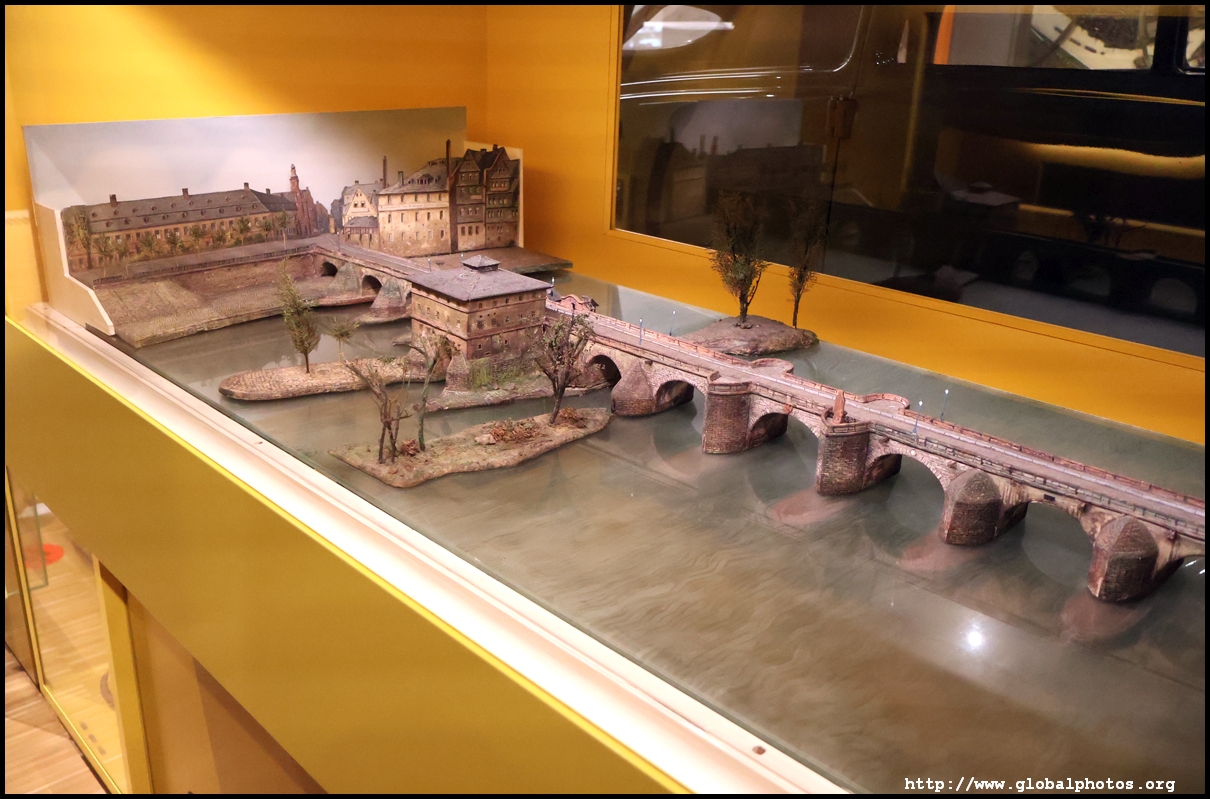
The Alte Brucke directed traffic into the city and was repaired many times since the 13th century.
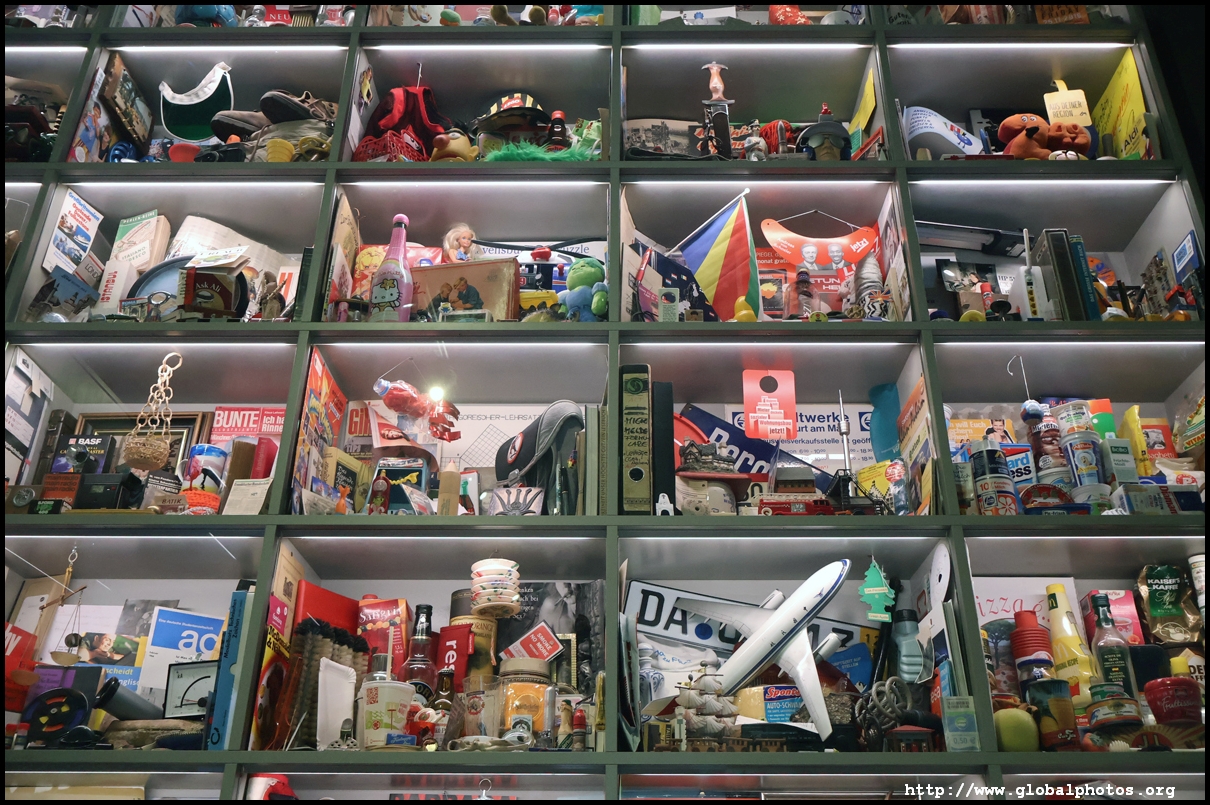
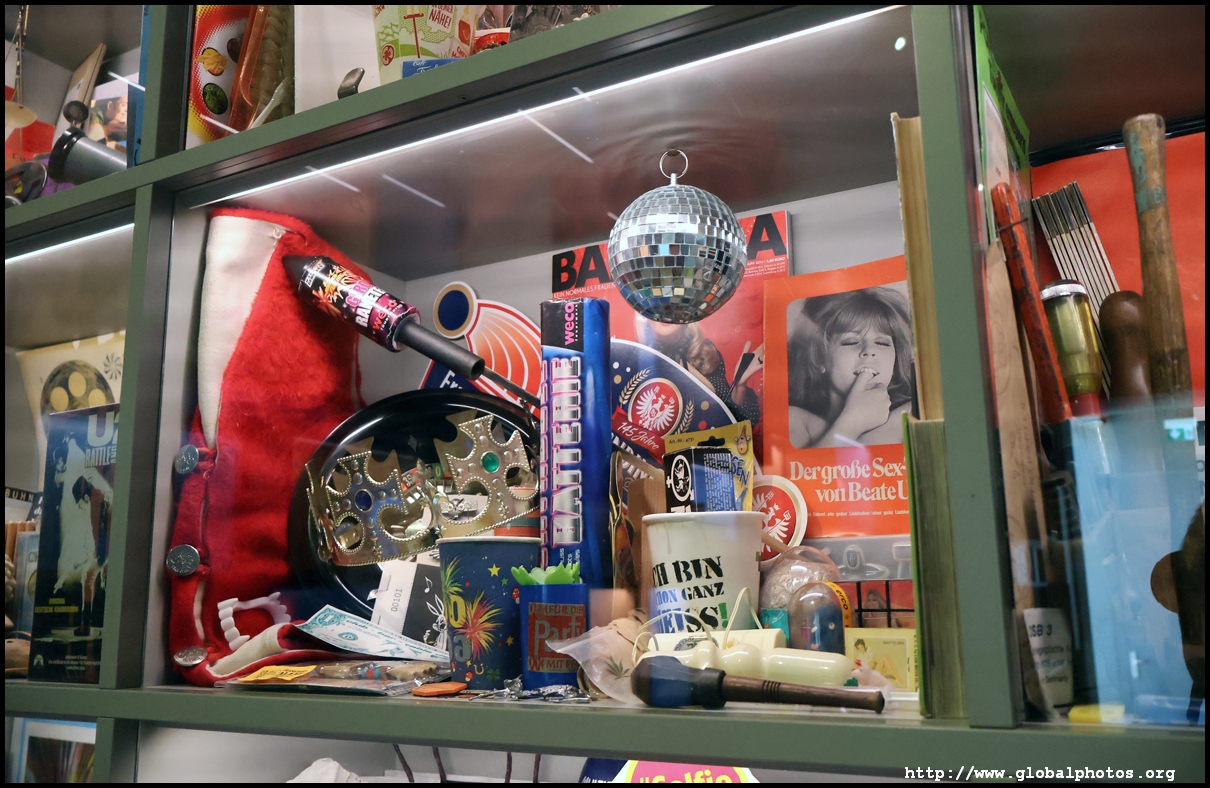
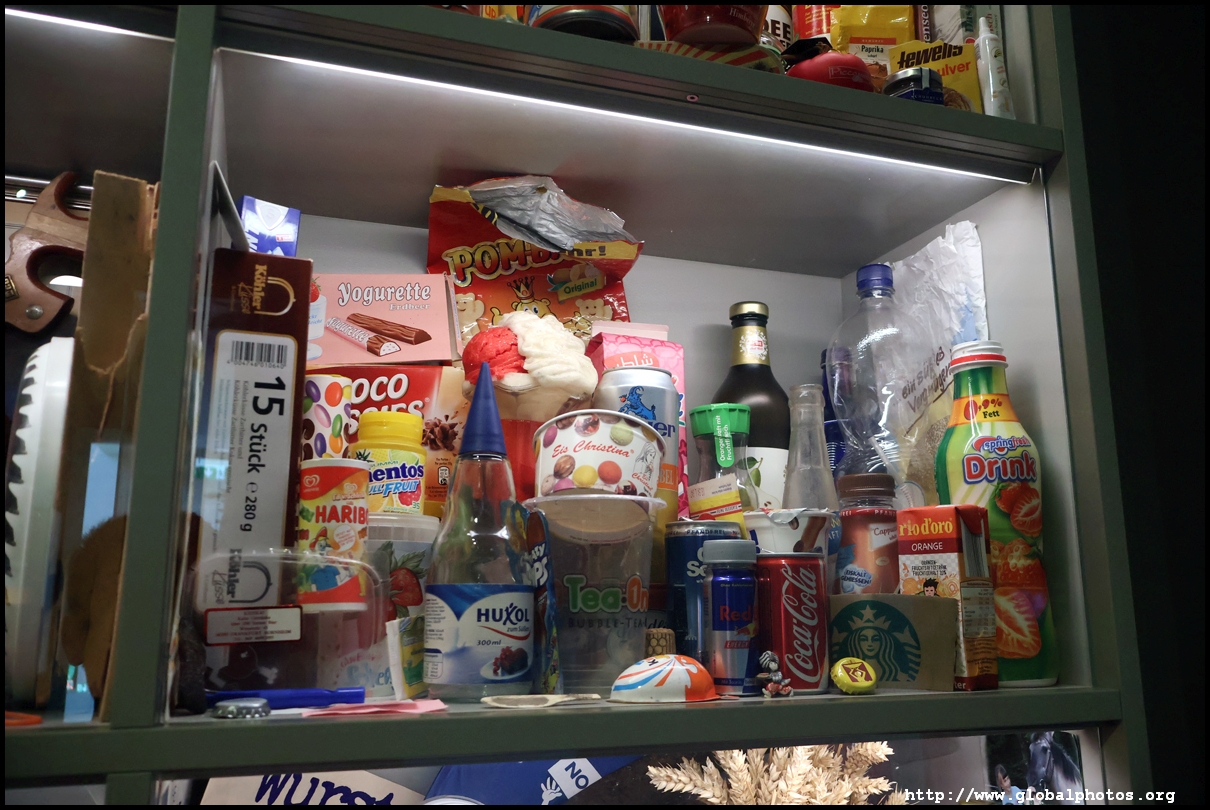
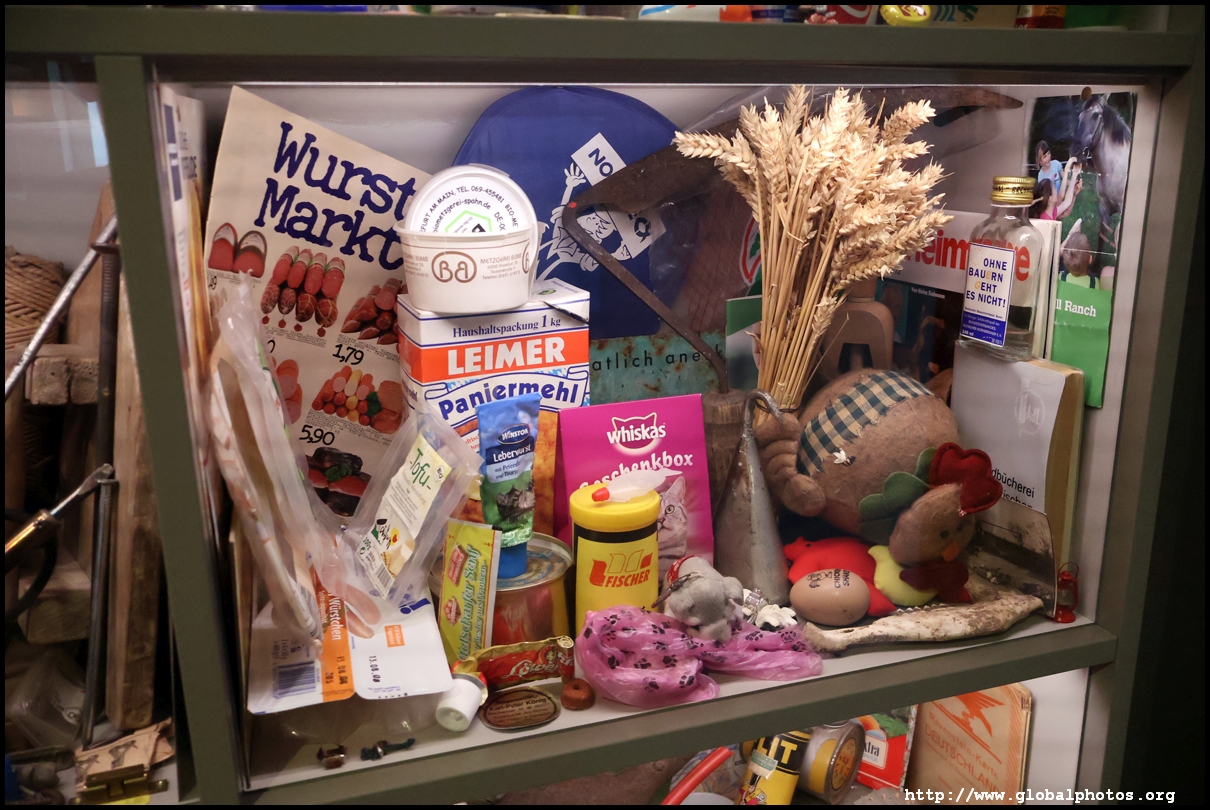
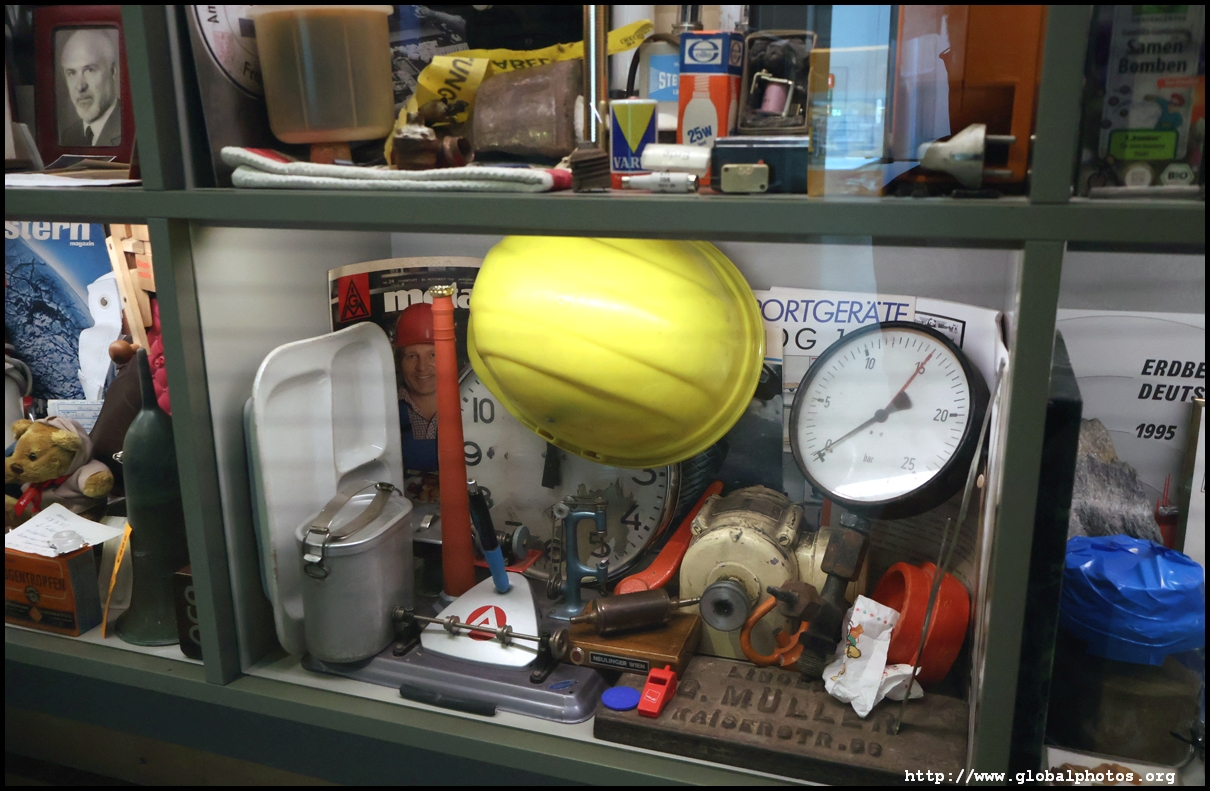
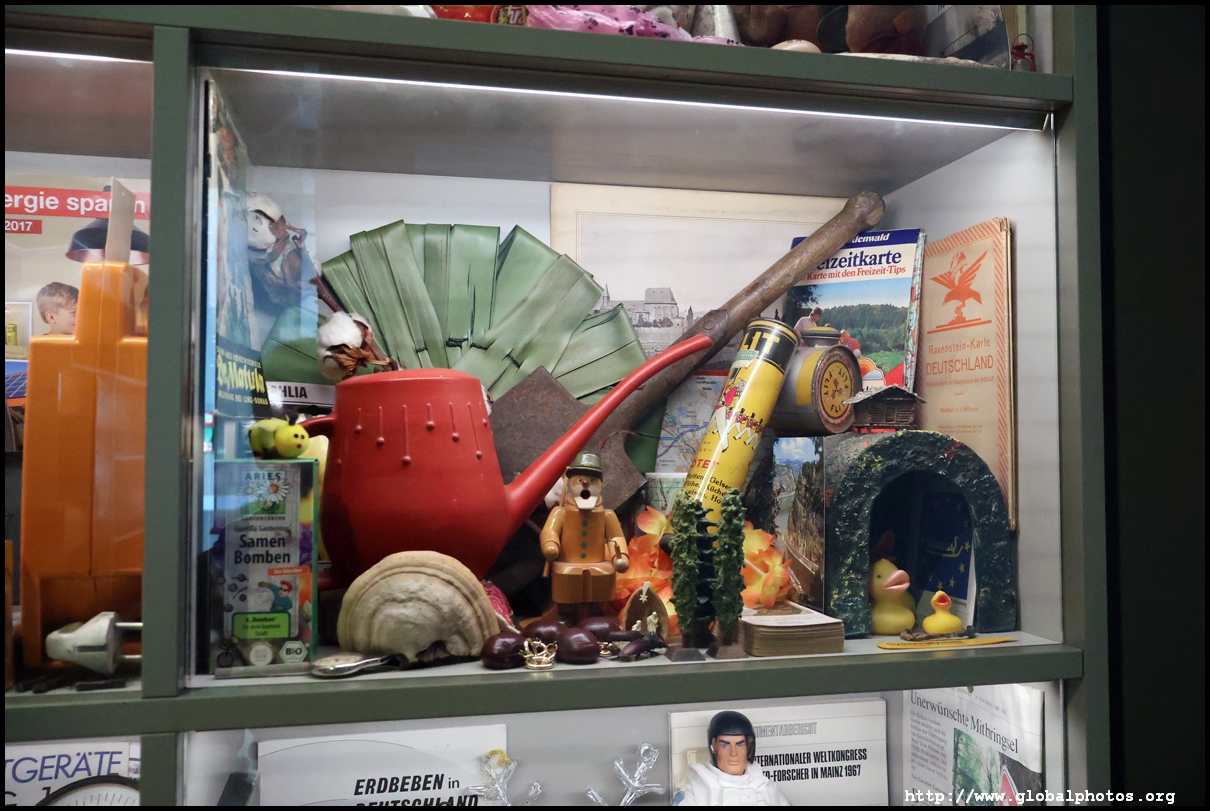
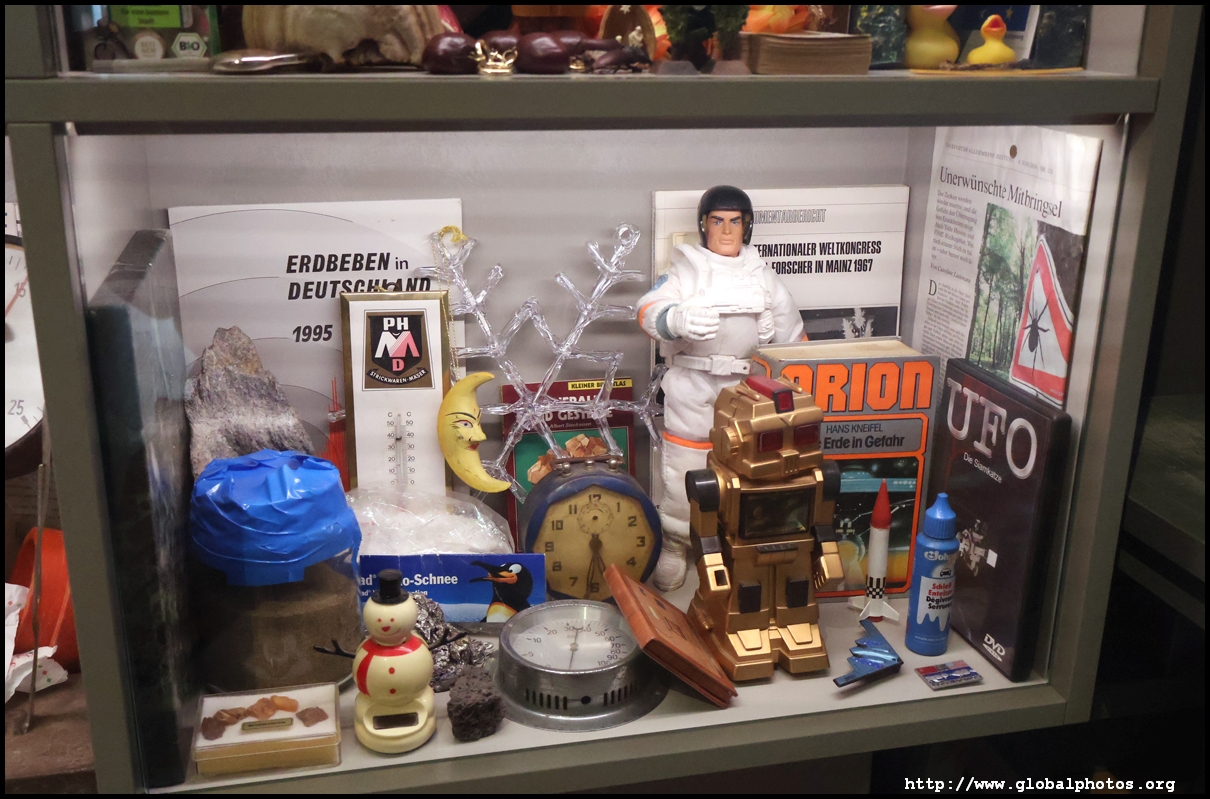
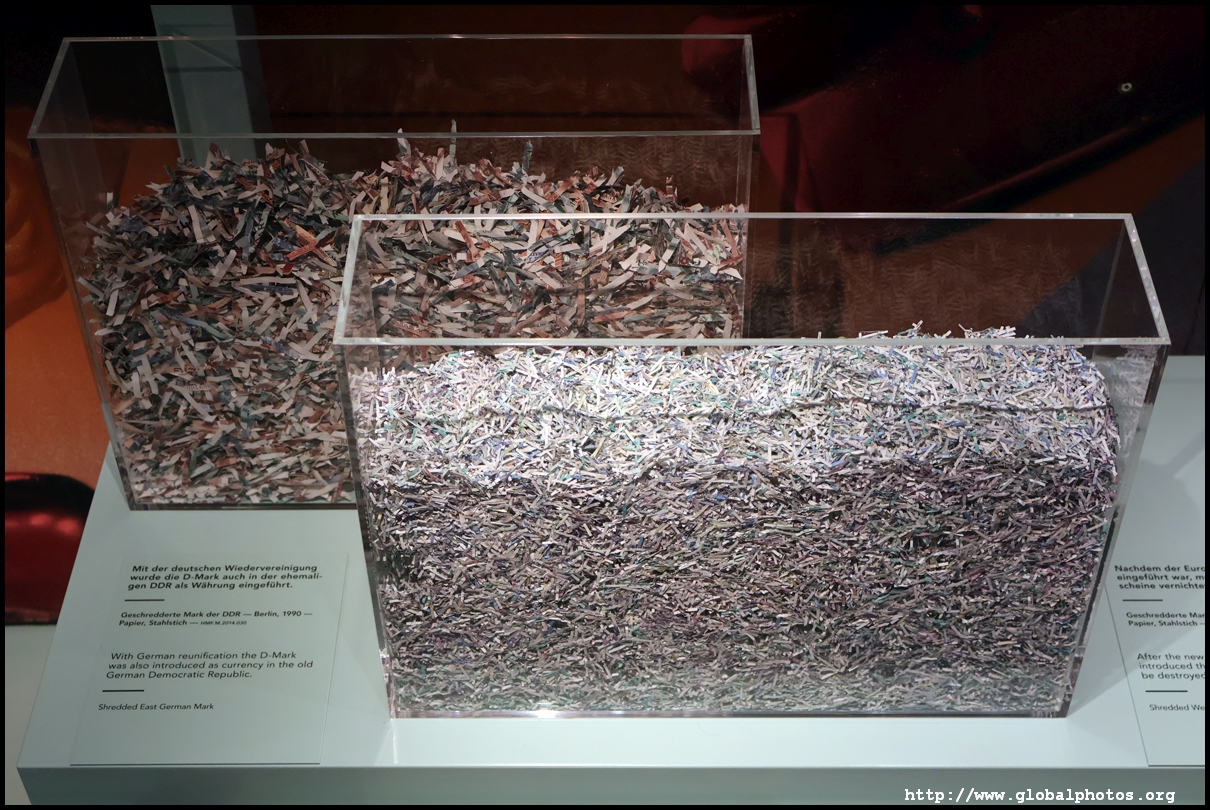
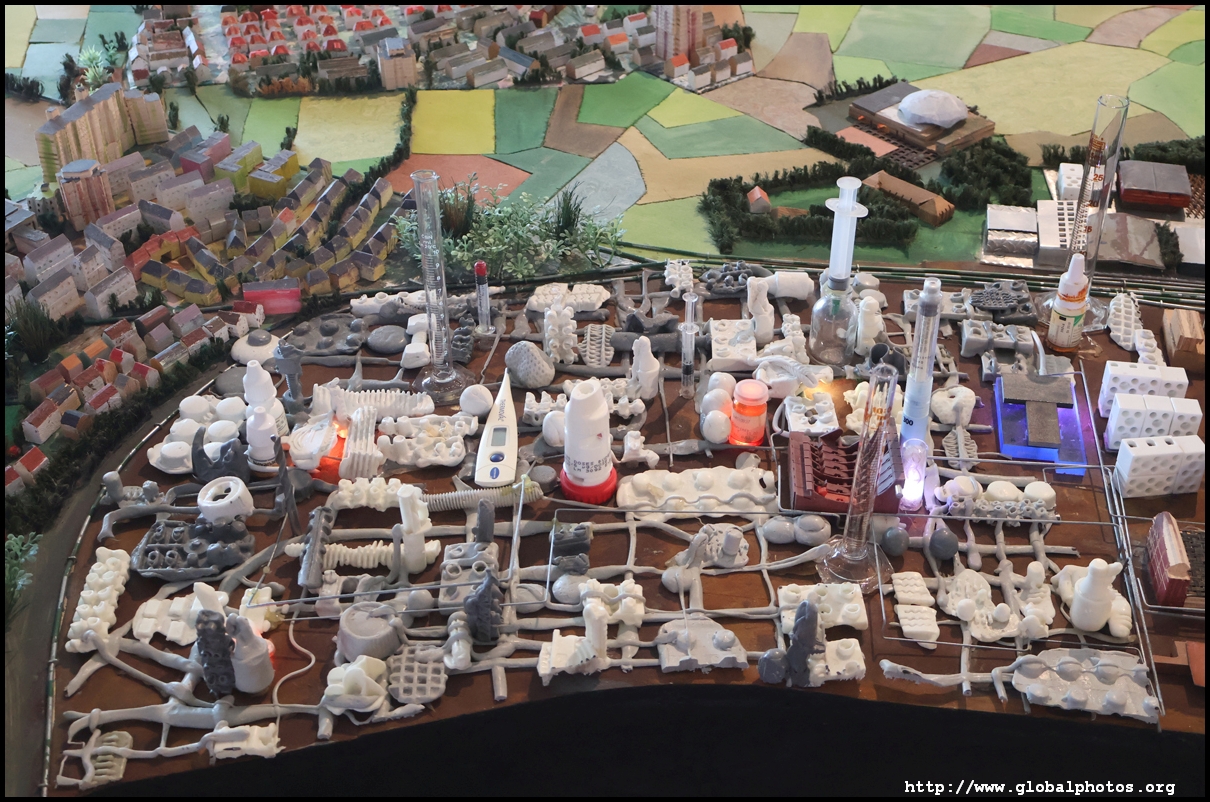
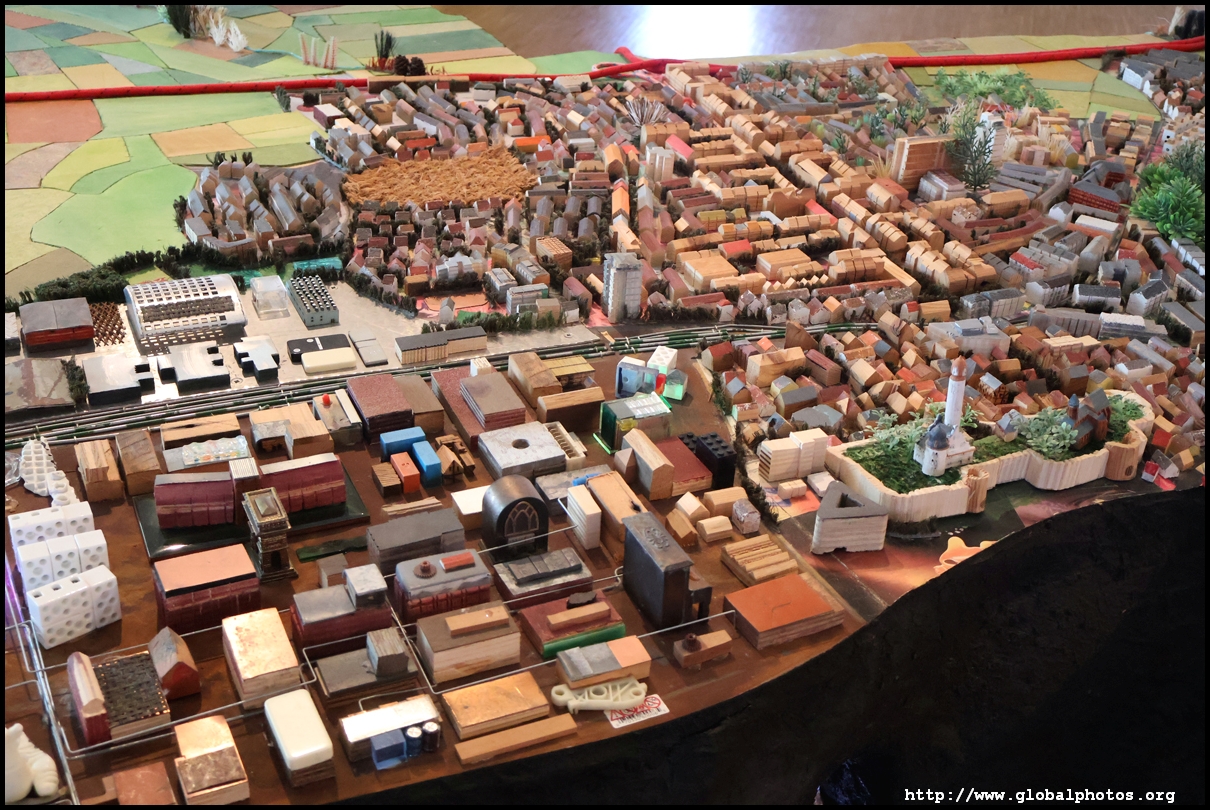
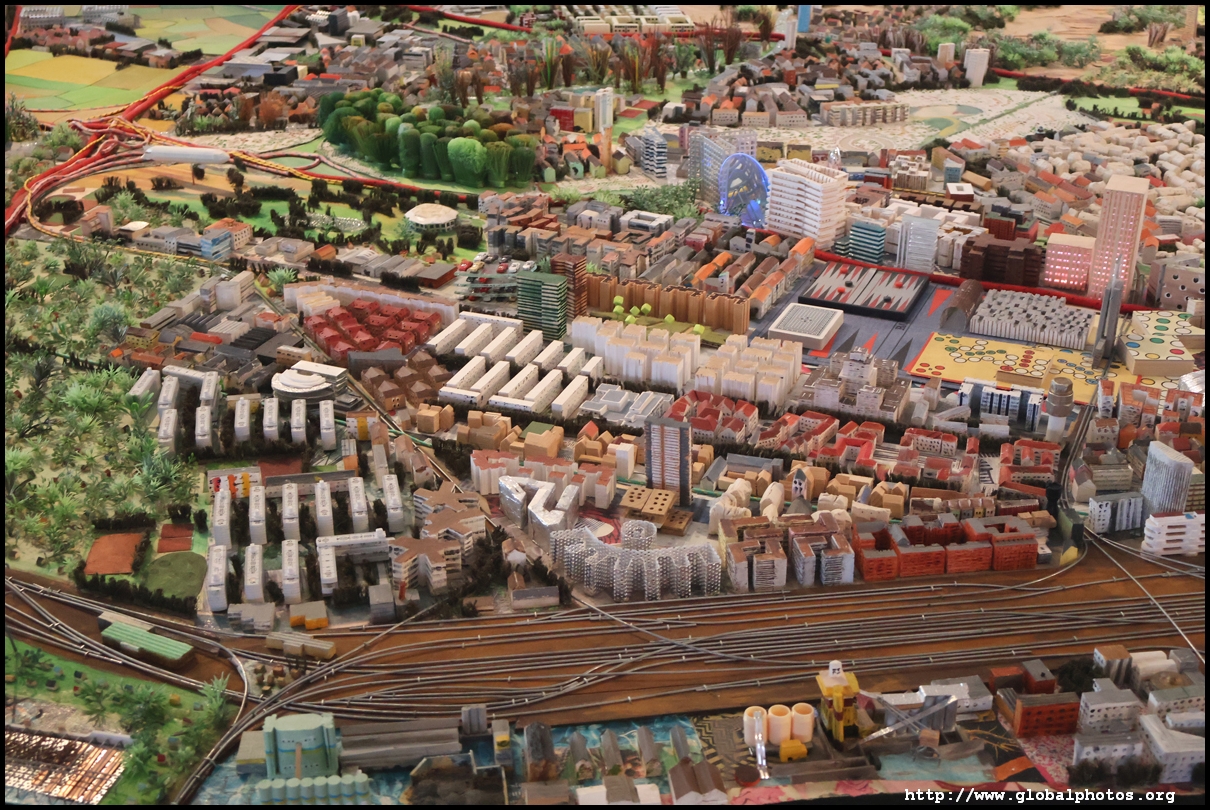
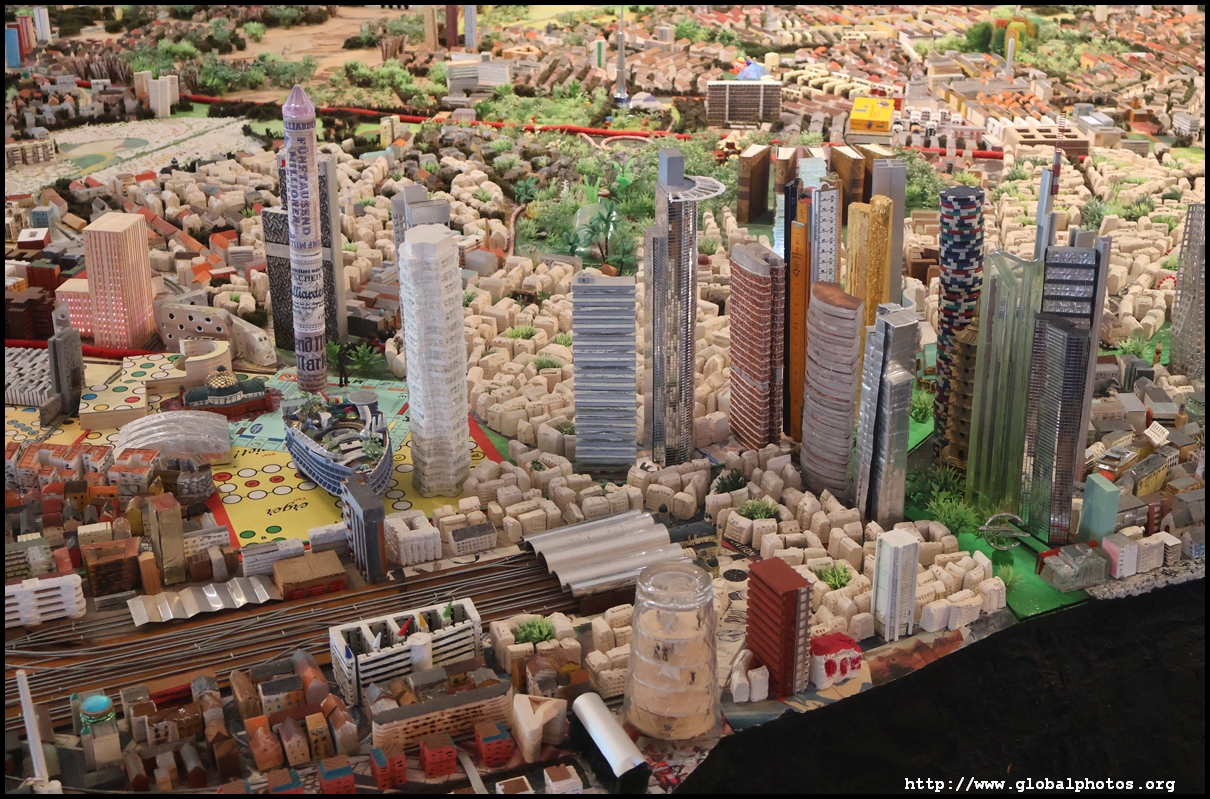
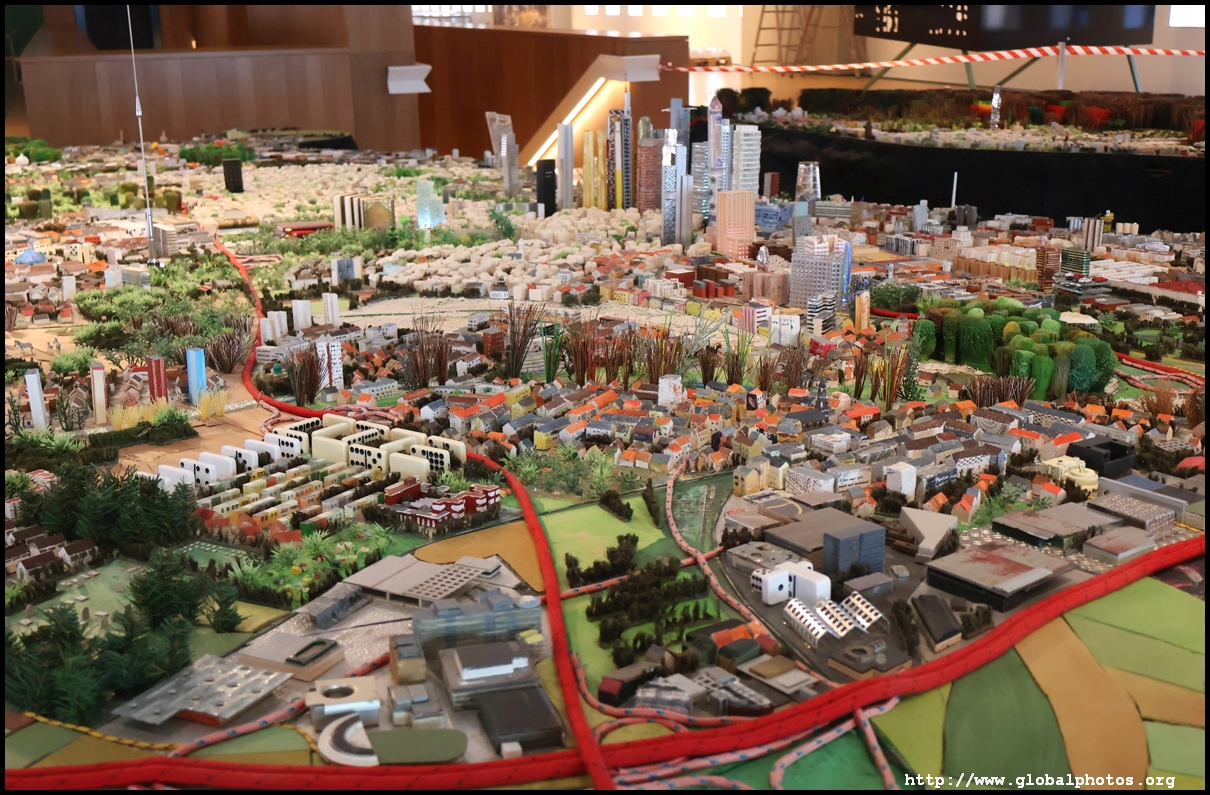
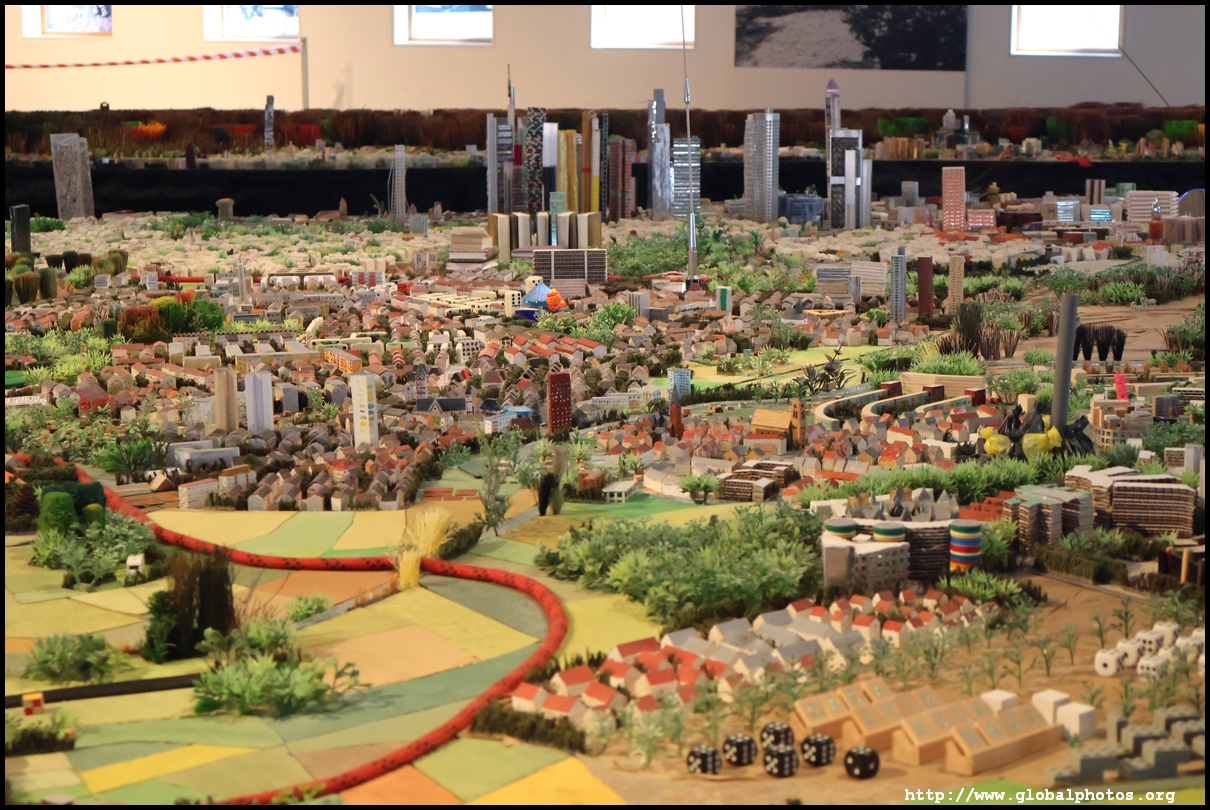
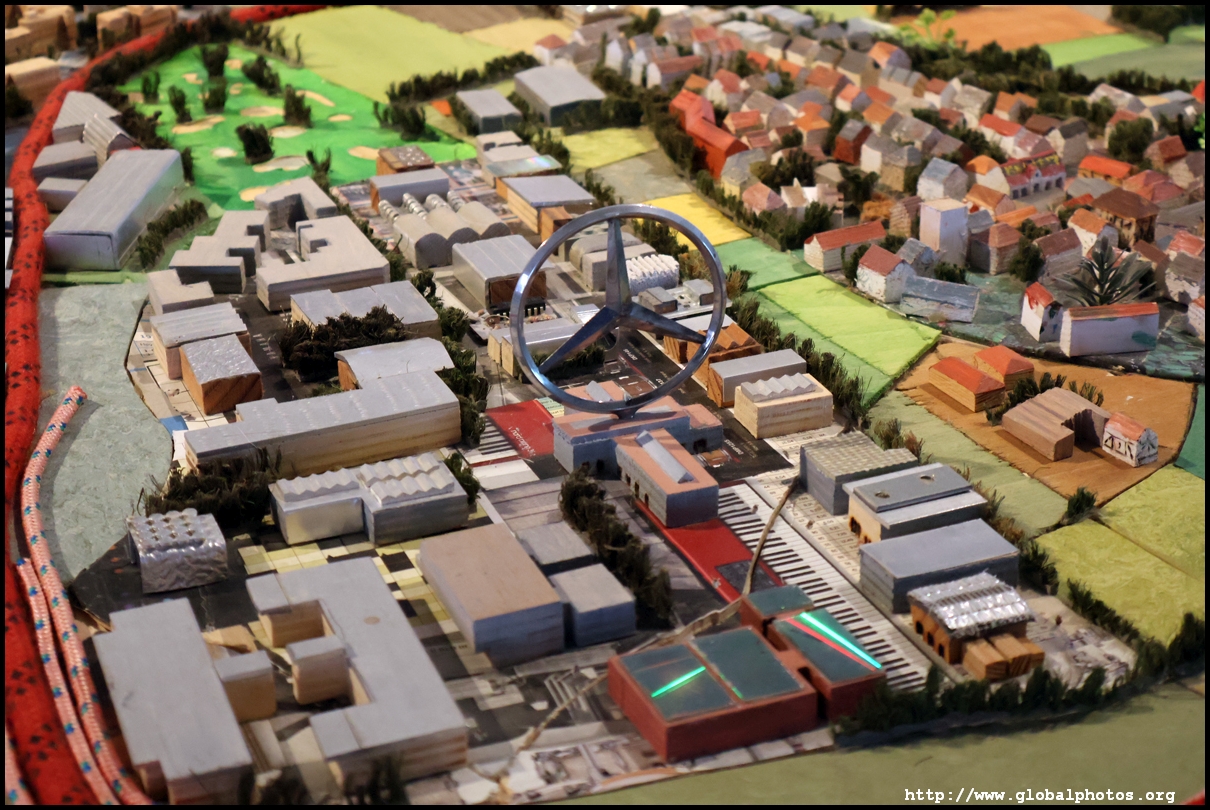
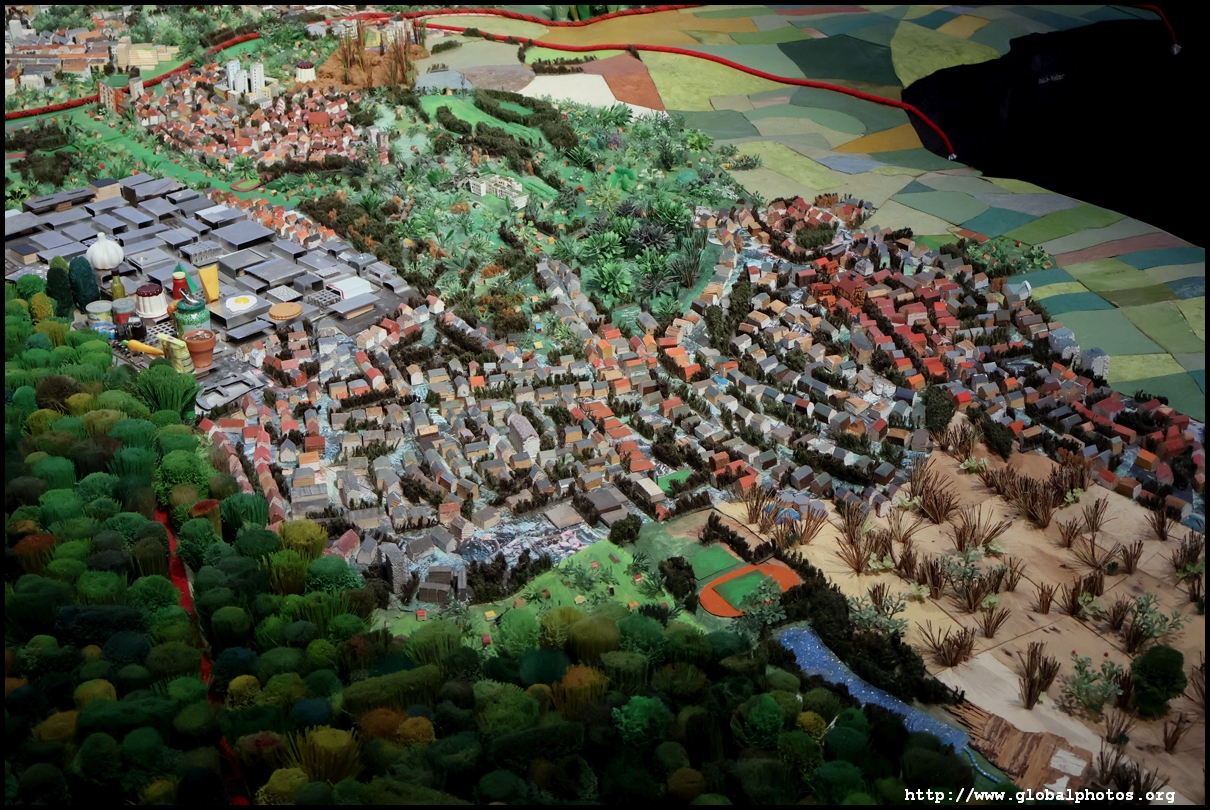
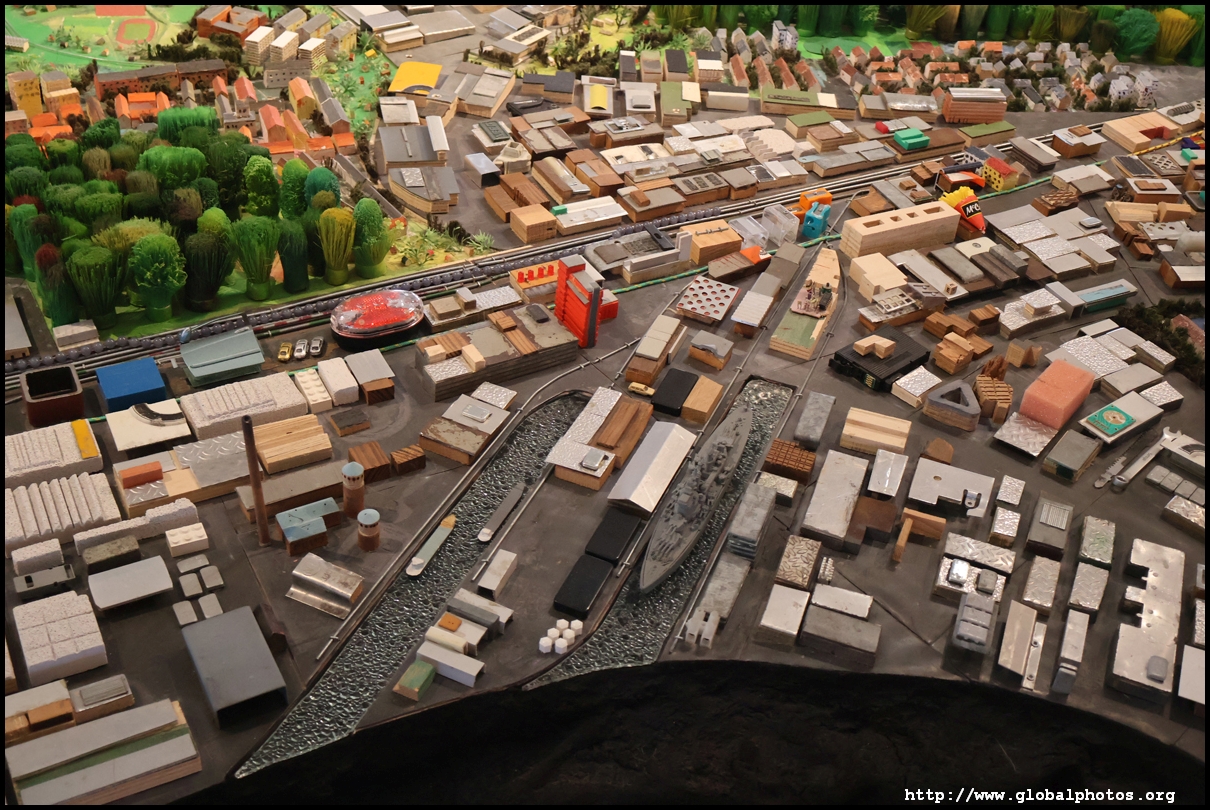
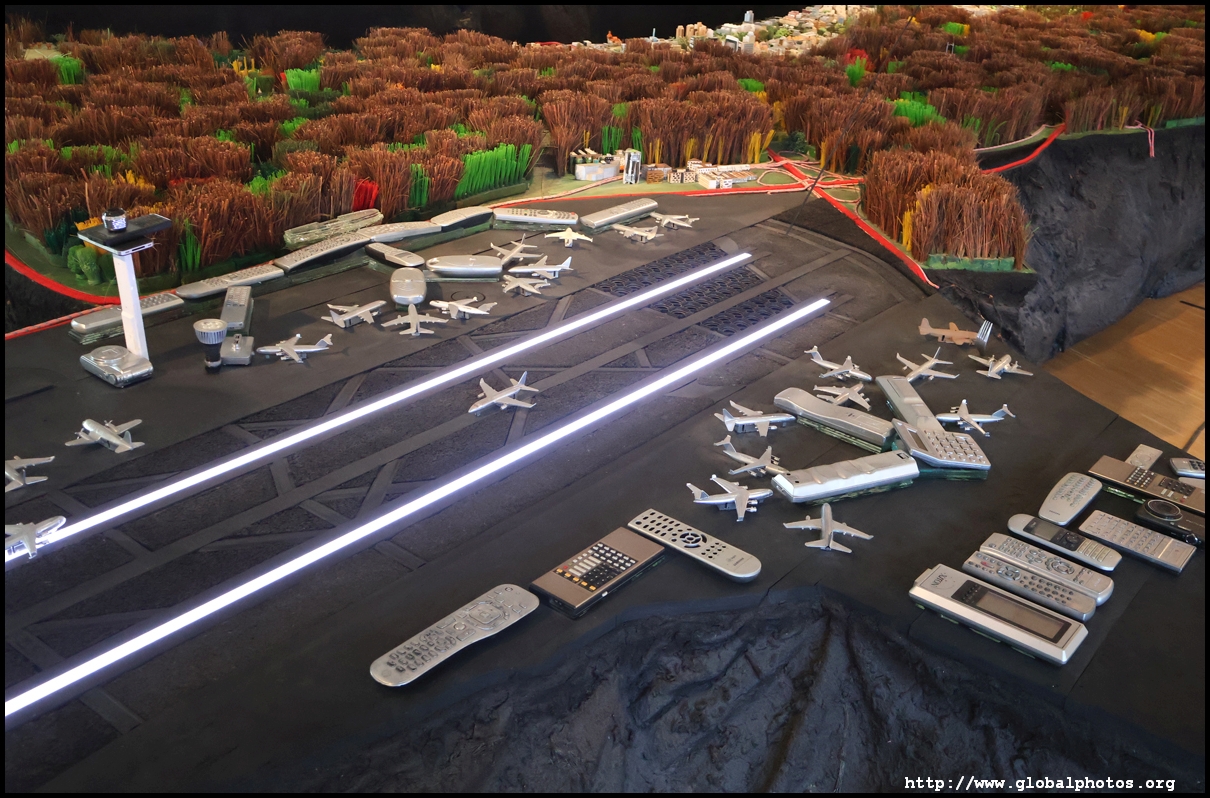
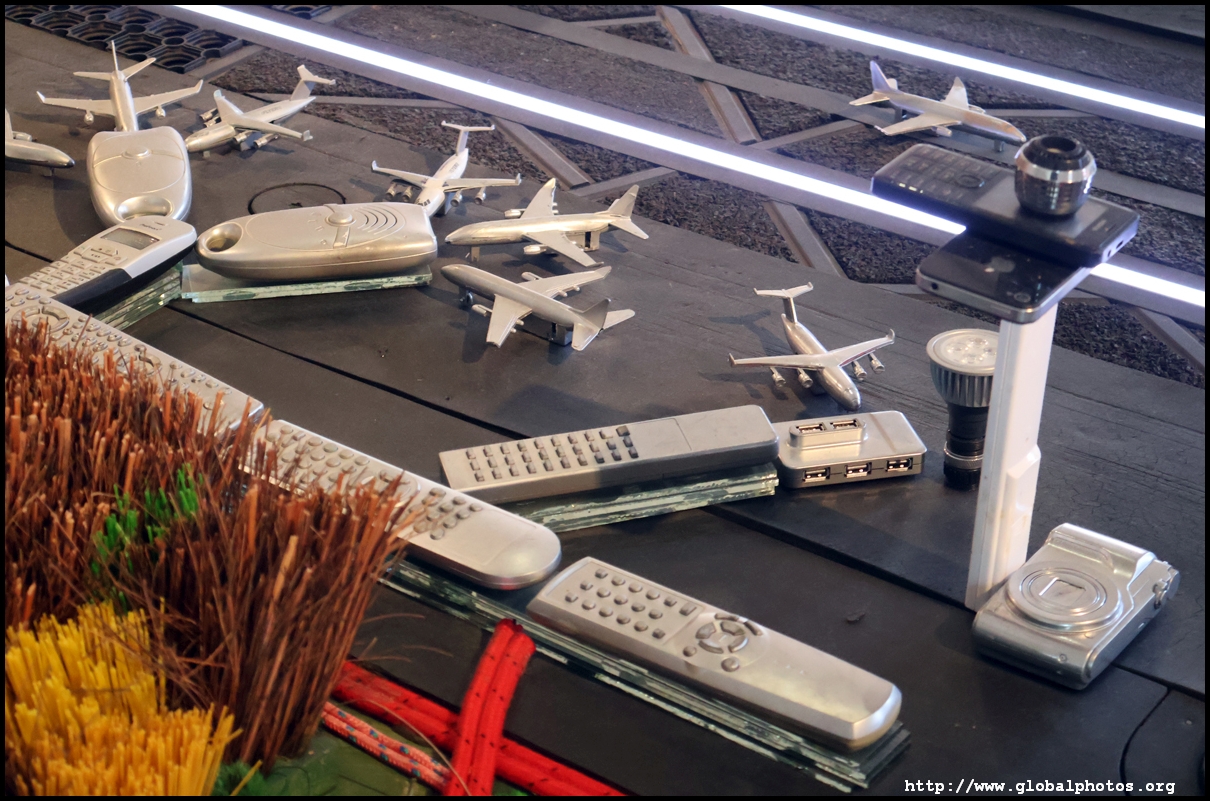
Stretching over 70 square m on the top floor, the city model shows Frankfurt as described by its residents in 2015. These were then given to Dutch artist Herman Helle and his team to create this model. Notice the variety of materials used, such as old cell phones for the airport and shredded euro banknotes for the European Central Bank.
|
|||